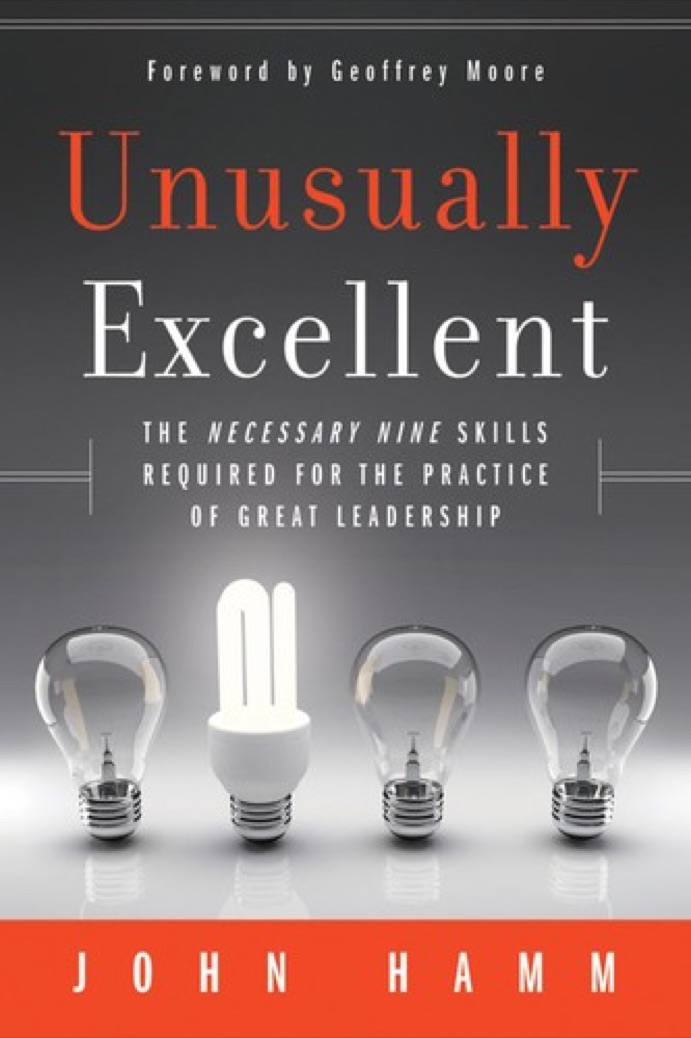
Unusually Excellent: The Necessary Nine Skills Required for the Practice of Great Leadership
Applying the lessons from "Unusually Excellent" by John Hamm to your life can be a transformative exercise in aligning your multi-faceted professional roles—from the high-stakes environment of the emergency room to the strategic landscape of venture capital—with a singular, high-standard philosophy of leadership. Here are some ways you might integrate these lessons:
-
Lead with Radical Authenticity: - In your work across law, medicine, and business, you are often the most qualified person in the room. Practice the skill of being authentic by being as transparent about your "Stay Hungry, Stay Humble" mantra as you are about your technical expertise; this builds the deep trust required to lead diverse teams through complex healthcare transitions.
-
Master the Precision of the Pilot's Checklist: - Use Hamm's emphasis on precise communication and execution by treating every entrepreneurial venture like a flight plan. In aviation, ambiguity is dangerous; apply that same rigor to your business strategy, ensuring every team member knows exactly what "winning" looks like for the next quarter to avoid the "fog of business."
-
View Decision-Making as a Triage Exercise: - As an ER physician, you are accustomed to making life-and-death decisions with limited data. Translate that clinical decisiveness into your VC work at Xcellerant Ventures by identifying the "critical few" variables that truly matter in a deal, avoiding the analysis paralysis that often plagues the investment world.
-
Be a Talent Magnet for Entrepreneurs: - Your role as a serial entrepreneur and investor means you are essentially a talent scout. Focus on the "Leading People" skill by looking beyond a founder's pitch deck to their character; invest in people who demonstrate the same credibility and authenticity that Hamm identifies as the bedrock of unusual excellence.
-
Engineer a Legacy of Impact: - Use your diverse platform—author, attorney, physician—to consciously build a legacy that transcends any single company. Focus on the "Consequence" skill by mentoring younger physicians and entrepreneurs, instilling in them the values of lifelong learning and ethical leadership that have guided your own career.
-
Bridge the Strategy-Execution Gap: - In healthcare, many great ideas fail because of poor execution. Apply Hamm's framework to ensure your telehealth or tribal health initiatives aren't just visionary concepts but have the tactical execution plans needed to survive the bureaucratic and regulatory hurdles of the medical industry.
By integrating these lessons, you can refine your leadership into a cohesive practice that spans all your disciplines, ensuring that your impact is as deep as it is broad. Whether you are in the cockpit, the courtroom, or the boardroom, focusing on the "Necessary Nine" will help you maintain the rare balance of high-level strategy and ground-level execution that defines an unusually excellent leader.
What the book covers
"Unusually Excellent: The Necessary Nine Skills Required for the Practice of Great Leadership" by John Hamm is a foundational exploration of the timeless principles that separate good managers from truly extraordinary leaders. Leveraging his experience as a Silicon Valley venture capitalist and CEO coach, Hamm argues that while business environments change, the core laws of leadership remain constant and rooted in character, competence, and consequence. The book provides a practical, day-to-day framework for mastering nine specific skills that enable leaders to earn credibility, execute strategy, and leave a lasting organizational impact.
Summary:
-
The Foundation of Credibility: - Hamm begins by establishing that leadership is a matter of character before it is a matter of skill, framing this as the "pregame" phase. He highlights authenticity and trustworthiness as the primary drivers of credibility, suggesting that a leader’s internal world must be aligned with their public actions to gain the genuine commitment of a team. - Being "compelling" is the third pillar of credibility; it involves more than charisma. It is the ability to articulate a clear, winning mission that resonates with others, transforming a group of employees into a unified force driven by a shared desire to succeed.
-
Leading People and Cultivating Talent: - The transition to "game day" competence begins with the ability to lead people effectively by recognizing that talent is an organization's most valuable asset. Hamm posits that unusual excellence requires leaders to be talent magnets who not only hire the best but also provide the clarity and environment necessary for those high-performers to thrive. - He emphasizes that leaders must move beyond simple supervision to active mentorship, ensuring that every individual understands their role within the larger strategic framework and feels empowered to take ownership of their specific contributions.
-
Crafting and Executing Strategy: - Strategy, in Hamm's view, is often over-complicated; he defines it simply as the high-level plan to win in a competitive landscape. He argues that an unusually excellent leader must bridge the gap between abstract vision and tactical reality by ensuring the strategy is understood by every member of the organization. - Execution is the discipline of getting things done through others. It requires a relentless focus on alignment, accountability, and the removal of obstacles that prevent the team from meeting its milestones, ensuring that the strategic plan doesn't just sit on a shelf but drives daily activity.
-
The Art of Precise Communication: - Hamm identifies communication as a primary leadership tool that is frequently misused. He advocates for extreme precision in language, arguing that ambiguity is the enemy of execution and that a leader's primary job is to provide absolute clarity regarding expectations, goals, and feedback. - Effective communication is not just about talking; it is about ensuring the message is received and internalized. By maintaining a consistent and transparent dialogue, leaders can eliminate the corrosive effects of office politics and keep the entire organization focused on the mission.
-
Making Difficult Decisions: - Decision-making is the ultimate test of a leader's competence and impact. Hamm breaks down the process into identifying the core problem, gathering the necessary data, and having the courage to act even when complete information is unavailable. - He warns against the trap of consensus-seeking that leads to paralysis, suggesting instead that leaders must be willing to make unpopular choices for the long-term health of the organization, standing by those decisions while remaining humble enough to adjust if new evidence emerges.
-
Building a Lasting Legacy: - The final section focuses on the "postgame" or the consequences of leadership. This involves intentionally shaping an organizational culture that reflects the leader's values and ensures the company's success continues long after their departure. - Building a legacy is about more than financial metrics; it is about the standard of excellence, the ethics of the team, and the development of the next generation of leaders who will carry the mission forward.
By focusing on these nine fundamental skills, John Hamm provides a roadmap for moving beyond the trends of the day toward a more grounded, effective, and enduring style of leadership. The book serves as a reminder that excellence is not an accident of personality but the result of disciplined practice and an unwavering commitment to the basics of human interaction and business execution.