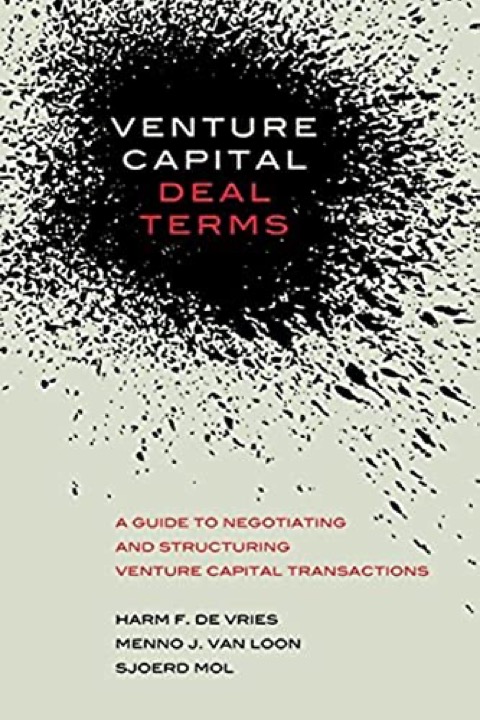
Venture Capital Deal Terms: A Guide to Negotiating and Structuring Venture Capital Transactions
Applying the lessons from "Venture Capital Deal Terms: A Guide to Negotiating and Structuring Venture Capital Transactions" by Harm de Vries and Menno van den Bosch to your life can be a masterclass in aligning complex interests toward a shared vision. Here are some ways you might integrate these lessons:
-
Master the Legal Lever: - As an attorney and physician-entrepreneur, you can use these deal terms to bridge the gap between medical innovation and financial sustainability. Understand that every clause in a term sheet—from liquidation preferences to board rights—is a lever that can be used to protect the integrity of your healthcare mission while satisfying the fiduciary requirements of your VC firm, Xcellerant Ventures.
-
Protect the Downside to Secure the Upside: - Just as you manage risk in the emergency room or the cockpit, use economic protections like liquidation preferences to prepare for "turbulence." Recognizing that not every venture will be a "unicorn" allows you to structure deals that provide safety nets for all parties, ensuring that a less-than-perfect exit does not become a total loss for your investors.
-
Curate Strategic Governance: - Apply the book’s lessons on board seats and veto rights to your leadership roles. Focus on creating boards that aren't just administrative monitors, but strategic assets that bring complementary expertise in law, medicine, and business to the table to guide the startup through its growth phases.
-
Align Incentives for the Long Haul: - Use founder vesting and anti-dilution terms to ensure that your teams "Stay Hungry." By structuring incentives that reward long-term commitment and performance, you mirror the discipline required in medical residency and pilot certification—where sustained excellence and presence are the only paths to ultimate success.
-
Negotiate with Empathy and Clarity: - Use the authors' breakdown of terms to demystify the process for first-time healthcare founders. By leading with transparency during negotiations and explaining the "why" behind the clauses, you embody the "Stay Humble" mantra, building the foundational trust necessary for a multi-year partnership.
-
Synthesize Multidisciplinary Knowledge: - Leverage your MBA and JD to see a deal through multiple lenses simultaneously. This book reinforces that a successful transaction is a fusion of legal precision, financial forecasting, and the psychological understanding of what motivates different stakeholders.
By integrating these lessons, you can navigate the high-stakes world of venture capital with the same precision you apply to a flight plan or a complex medical procedure. Mastering the mechanics of the deal allows you to focus on what truly matters: fueling the technological innovations that will transform the future of healthcare delivery.
What the book covers
"Venture Capital Deal Terms: A Guide to Negotiating and Structuring Venture Capital Transactions" by Harm de Vries and Menno van den Bosch is a comprehensive technical manual designed to demystify the complex legal and economic framework of venture capital investments. It serves as a bridge between legal theory and financial practice, providing detailed explanations of the clauses found in standard term sheets and shareholder agreements. The book focuses on balancing the interests of founders and investors to ensure long-term alignment and successful exits.
Summary:
-
The Architecture of the Term Sheet: - The authors emphasize the term sheet as the foundational blueprint for the entire investment relationship. They explain that while the term sheet is generally non-binding, it sets the psychological and commercial precedent for the binding legal documents that follow, such as the Investment Agreement and Articles of Association.
-
Valuation and the Cap Table: - This section delves into the nuances of pre-money and post-money valuation, as well as the dilutive impact of employee stock option pools (ESOPs). The authors argue that founders must look beyond the "headline" price to understand how the option pool shuffle and existing convertible notes affect their actual ownership stake and the final capitalization table.
-
Economic Rights and Liquidation Preferences: - A core focus is placed on liquidation preferences, which determine how proceeds are distributed during a sale or liquidation. The authors analyze different structures—such as participating versus non-participating preferred stock—and how these terms protect investor capital in downside or moderate-exit scenarios.
-
Governance and Control Rights: - The text outlines how investors use board representation and protective provisions (veto rights) to influence company strategy. It highlights the natural tension between founder autonomy and the investor’s need to monitor their fiduciary responsibility to their own limited partners through specific information rights and consent requirements.
-
Exit Mechanics and Liquidity: - The book details the mechanics of "drag-along" and "tag-along" rights, which ensure that minority shareholders cannot block a majority-approved sale while also protecting minority holders from being left behind. These provisions are crucial for ensuring the venture capital fund can achieve liquidity within its fixed fund lifecycle.
-
Anti-Dilution and Pre-emptive Rights: - De Vries and van den Bosch explain the mechanisms that protect investors from future "down rounds" where shares are sold at a lower price than the previous round. They contrast "full ratchet" and "weighted average" protections, demonstrating how these legal levers maintain the value of an investor's initial capital in volatile markets.
-
Founder Vesting and Commitment: - To ensure long-term commitment, the authors discuss the necessity of founder vesting schedules and "good leaver/bad leaver" provisions. This ensures that the human capital—the founders—remains incentivized and tied to the company's success, preventing equity from sitting with individuals who no longer contribute to the venture.
This book is significant because it provides a granular, clause-by-clause breakdown of venture deal-making that is often obscured by industry jargon. For entrepreneurs and investors alike, it transforms "boilerplate" legal text into a strategic tool for managing risk, upside, and the interpersonal dynamics of a high-growth startup.