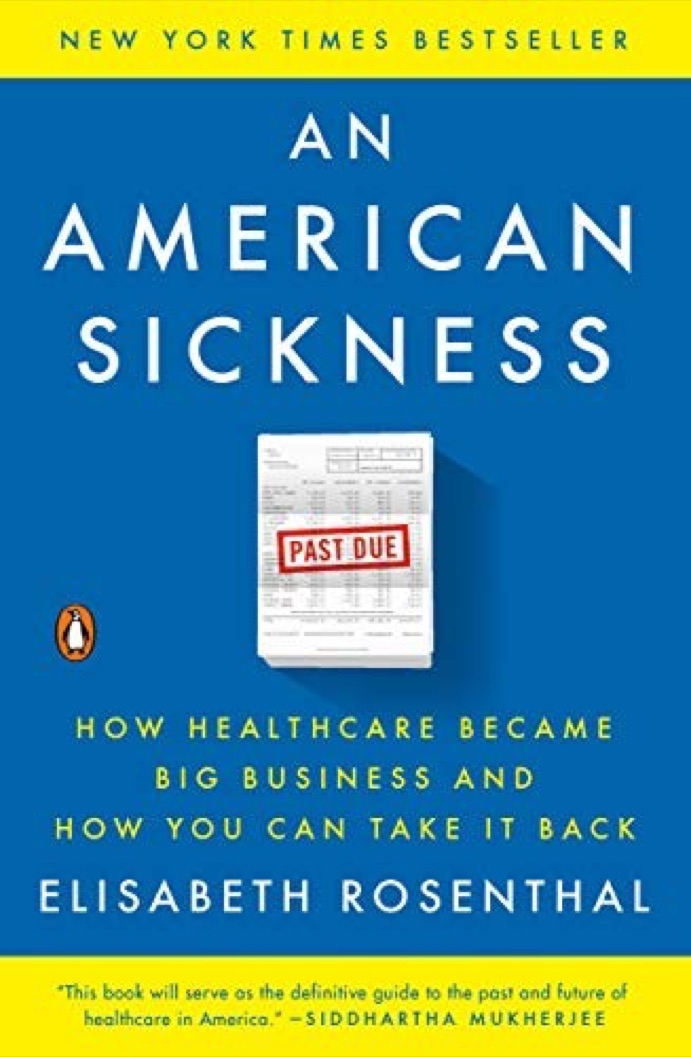
An American Sickness: How Healthcare Became Big Business and How You Can Take It Back
Applying the lessons from "An American Sickness" by Elisabeth Rosenthal to your life can be a transformative step in becoming a more discerning patient, a more ethical healthcare leader, and a more effective advocate for systemic change. Here are some ways you might integrate these lessons:
- Demand Radical Transparency: - You should treat healthcare transactions with the same scrutiny as any other high-stakes business deal. Whether you are leading a medical startup or receiving care, insist on knowing the "all-in" price upfront and challenge the obfuscation of billing codes, recognizing that transparency is the first step toward restoring trust in the profession.
- Align Incentives with Outcomes: - As an entrepreneur and physician, you can use these insights to build models that reward value and health rather than volume. Focus your ventures on solving the inefficiencies Rosenthal highlights, such as reducing administrative waste or streamlining the supply chain, ensuring that profit follows excellence in care rather than exploitative billing practices.
- Empower the Patient-Consumer: - You can integrate a culture of patient advocacy into your practices by providing clear, accessible information regarding costs and alternatives. By educating your patients and clients about the financial implications of their medical choices, you foster a partnership that respects their financial well-being as much as their physical health.
- Scrutinize the Supply Chain: - Whether in law or medicine, look closely at the "middlemen" in your operations. Evaluate how PBMs, insurers, and vendors influence your costs and outcomes, and seek out direct-to-consumer or transparent-pricing models that bypass the layers of rent-seeking that Rosenthal describes.
- Lead with Ethical Stewardship: - Use your multi-disciplinary background to champion policy changes and legal standards that protect patients from predatory pricing. You have the unique ability to bridge the gap between medicine, business, and law to advocate for a system where clinical decisions are shielded from the pressures of corporate bottom lines.
- Question Medical Necessity: - Cultivate a mindset of "less is more" when appropriate, both in your own health and in your clinical leadership. By resisting the urge to over-test or over-treat, you not only reduce costs but also mitigate the risks of unnecessary medical intervention, adhering to the core principle of doing no harm.
By integrating these lessons, you can help dismantle the "sickness" within the American healthcare system from the inside out. Your role as a leader involves not just navigating the current landscape, but actively redesigning it to be more equitable, transparent, and focused on the fundamental mission of healing.
What the book covers
"An American Sickness: How Healthcare Became Big Business and How You Can Take It Back" by Elisabeth Rosenthal is a comprehensive and provocative analysis of the financial evolution of the United States healthcare industry. Rosenthal, a physician turned journalist, deconstructs how a sector once centered on patient care transitioned into a profit-driven enterprise characterized by opaque pricing and complex billing structures. The book serves both as an investigative report on the systemic failures of the current model and a practical manual for patients seeking to navigate and reform the system.
Summary:
- The Commercialization of Care: - Rosenthal explains how the American medical system shifted from a charitable, non-profit model to one dominated by corporate interests. She outlines the historical changes that allowed hospitals, once community fixtures, to become massive conglomerates focused on market share and revenue optimization rather than just clinical outcomes.
- Hospital Billing and the Chargemaster: - The author exposes the "chargemaster," a secretive list of inflated prices for every item and service a hospital provides. She illustrates how these arbitrary figures serve as a starting point for negotiations with insurers, often leaving uninsured or out-of-network patients with astronomical bills for basic supplies like bandages or common medications.
- The Rise of the Middleman: - A significant portion of the book focuses on how health insurance companies and pharmacy benefit managers (PBMs) have become powerful intermediaries. Rather than lowering costs, these entities often benefit from high prices through rebates and administrative fees, creating a feedback loop that drives up the overall cost of care for the end-user.
- Pharmaceutical and Device Profiteering: - Rosenthal examines the tactics used by drug and medical device manufacturers to extend patents and maintain high prices. She details "pay-for-delay" schemes and the marketing of "me-too" drugs—slight variations of existing medications—that offer little clinical improvement but command premium pricing, further straining the healthcare budget.
- The Ethics of Testing and Technology: - The book addresses the overutilization of medical technology and diagnostic testing, often driven by fear of litigation or the financial incentives of physician-owned facilities. Rosenthal argues that the proliferation of expensive imaging and specialized procedures frequently occurs without evidence-based necessity, prioritizing billing over the Hippocratic oath.
- The Financialization of Private Equity: - More recent trends are explored, such as the entry of private equity firms into healthcare sectors like emergency medicine and dermatology. Rosenthal describes how the pressure for short-term returns can lead to staffing shortages, surprise billing, and a degradation of the physician-patient relationship as clinicians are pushed to meet productivity quotas.
- A Playbook for the Patient: - The final section provides actionable advice for individuals to protect themselves financially. This includes strategies for questioning medical necessity, negotiating bills before and after treatment, and demanding transparency from providers and insurers, empowering patients to act as informed consumers in a dysfunctional market.
This work is a crucial critique for anyone within the medical field, highlighting the systemic perverse incentives that have prioritized fiscal growth over public health. It challenges leaders to reconsider the moral and economic foundations of the industry to restore the focus to the welfare of the patient.