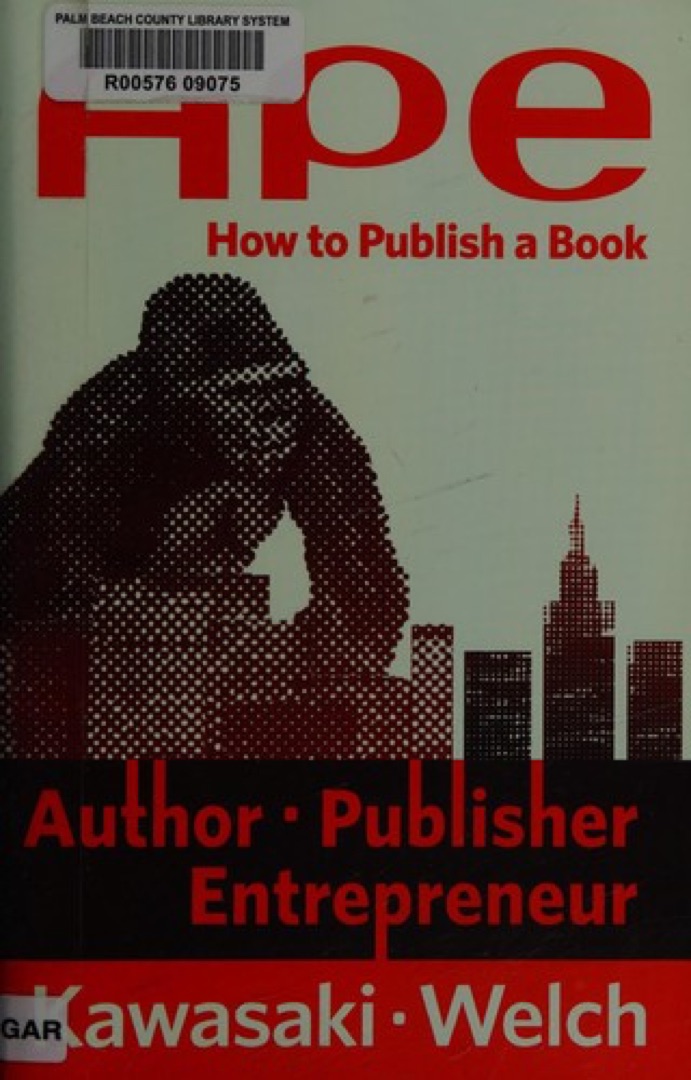
APE: Author, Publisher, Entrepreneur—How to Publish a Book
Applying the lessons from "APE: Author, Publisher, Entrepreneur—How to Publish a Book" by Guy Kawasaki and Shawn Welch to your life can be a transformative step toward establishing your authority and scaling your influence across various professional domains. Here are some ways you might integrate these lessons:
- Adopt a Polymath Perspective: - Just as you have balanced the demands of medicine, law, and aviation, this book teaches you to view a single project through multiple lenses simultaneously. By acting as the Author, Publisher, and Entrepreneur, you learn that success in any venture requires you to be both the visionary creator and the pragmatic operator who understands the "unit economics" of your effort.
- Standardize Excellence through Discipline: - In the emergency room or the cockpit, there is no room for "good enough," and Kawasaki argues that self-publishing should be held to the same rigorous standard. You can integrate this by ensuring that every piece of content or business service you launch undergoes the same "triple-check" of professional editing and design, maintaining your reputation for excellence across all your platforms.
- Build Your Platform Before You Need It: - The book’s focus on "platform" highlights that your influence is directly tied to the community you cultivate. For a serial entrepreneur, this means moving beyond transactional networking to building a consistent digital presence where you provide value long before you ask for a sale, making your next venture or book launch an anticipated event rather than a cold start.
- Master the Technical Underpinnings: - Kawasaki doesn't just talk about ideas; he talks about file formats and distribution algorithms. This reinforces the lesson that true leadership requires a deep dive into the "how" as well as the "why." Whether you are scaling a healthcare company or writing a legal brief, understanding the technical tools of your trade gives you a competitive edge that those who outsource their thinking lack.
- Leverage the Power of Evangelism: - The emphasis on generating reviews and engaging with critics mirrors the constant feedback loops needed in medical practice and venture capital. You should view every project as a beta test that requires honest, external validation to improve, using the "evangelism" techniques in the book to turn your customers and patients into your most effective marketing force.
By integrating these lessons, you will not only become a more effective communicator of your vast experiences but also a more agile entrepreneur capable of navigating the rapidly changing intersections of healthcare, technology, and media.
What the book covers
"APE: Author, Publisher, Entrepreneur—How to Publish a Book" by Guy Kawasaki and Shawn Welch is a comprehensive manual for writers looking to navigate the modern self-publishing landscape. It breaks down the process of book creation into three distinct roles: the author who crafts the content, the publisher who manages the production, and the entrepreneur who drives the marketing and sales. By demystifying the industry, Kawasaki and Welch provide a tactical roadmap for anyone who wants to bypass traditional gatekeepers and bring their ideas directly to the market.
Summary:
- The Rise of Artisanal Publishing: - The authors introduce the concept of "artisanal publishing," a movement where authors maintain complete creative and financial control by managing the publishing process themselves. This approach requires a shift in mindset, moving away from seeking validation from traditional publishing houses and instead focusing on meeting high professional standards independently.
- The Author’s Role and Craft: - This section emphasizes the importance of writing a book that provides genuine value or entertainment. Kawasaki and Welch provide advice on finding a unique "hook," maintaining a disciplined writing schedule, and adopting a "breathless" writing style that keeps readers engaged, while stressing that the foundation of all success is a high-quality manuscript.
- The Publisher’s Technical Responsibilities: - Transitioning to the publisher role, the book covers the critical logistics of production, including professional copyediting, interior layout, and cover design. It provides granular detail on technical aspects such as ISBNs, copyright registration, and the conversion of manuscripts into various digital formats like EPUB and MOBI to ensure compatibility across all e-readers.
- The Entrepreneurial Marketing Engine: - Marketing is framed not as a post-publication task but as a continuous effort to build a personal platform. The authors explain how to utilize social media—specifically focusing on platforms like Google+, Twitter, and Facebook—to cultivate a community of supporters and "evangelists" who will help spread the word upon the book's release.
- Distribution Strategies and Platforms: - The book explores the pros and cons of various distribution channels, including Amazon’s Kindle Direct Publishing (KDP), Apple Books, and Barnes & Noble. It discusses the strategic decision of whether to go "exclusive" with one platform for certain perks or to distribute "wide" to reach the largest possible global audience.
- The Art of Evangelism and Reviews: - A significant portion of the text is dedicated to securing reviews, which the authors argue are the lifeblood of book sales. They provide a step-by-step guide on how to identify influencers, pitch them effectively, and manage the feedback loop to maintain a book's momentum long after its initial launch date.
- Financial Management and Pricing: - The authors provide a pragmatic look at the economics of self-publishing, including how to price a book to maximize both royalties and reach. They advocate for a pricing sweet spot (typically between $2.99 and $9.99) and explain how to track sales data to make informed adjustments to marketing spend.
Ultimately, "APE" is significant because it democratizes the power of the press, providing a blueprint for thinkers and leaders to share their expertise without seeking permission. It transforms the act of publishing from a passive wait for acceptance into an active, entrepreneurial venture that rewards those with the discipline to master multiple roles.