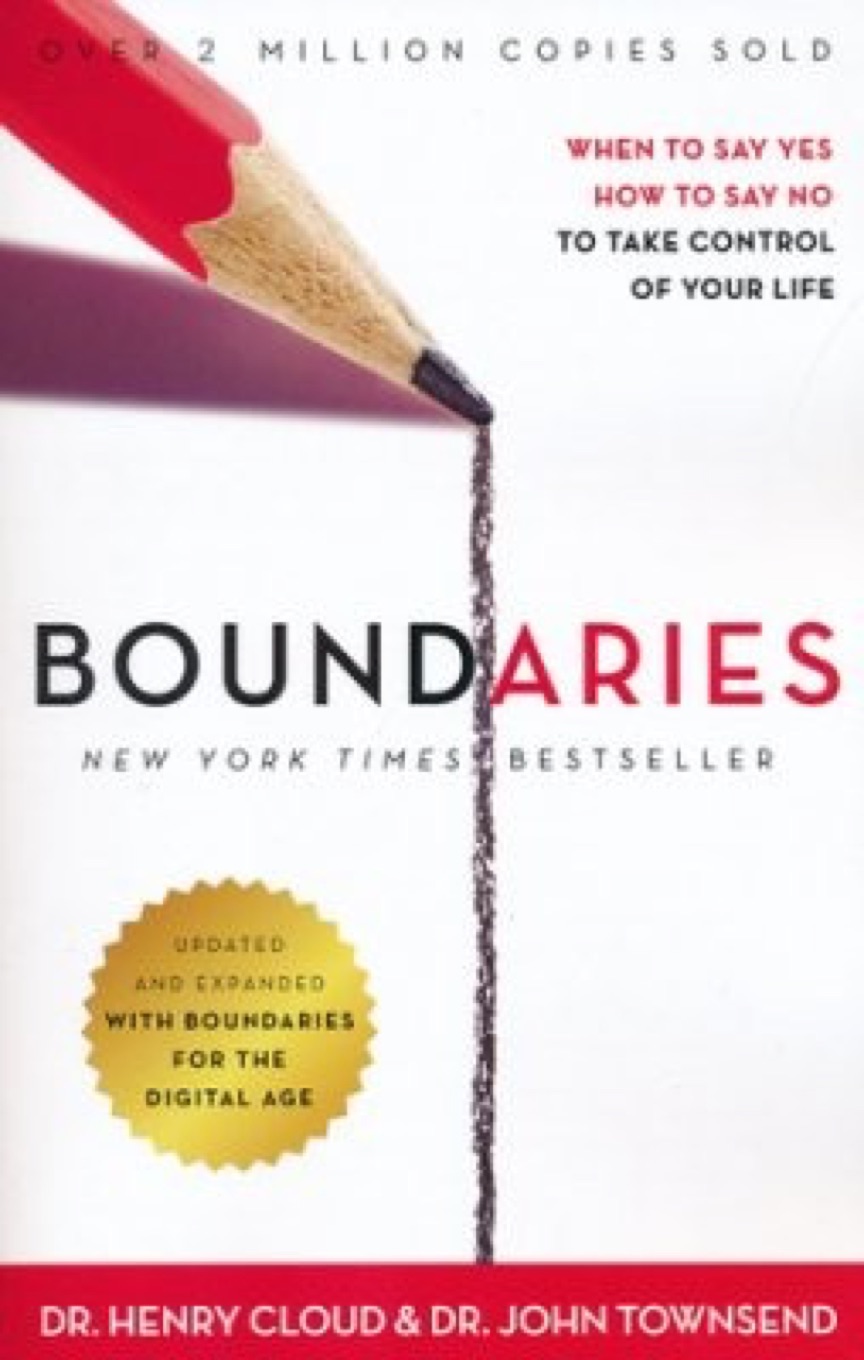
Boundaries: When to Say Yes, How to Say No to Take Control of Your Life
Applying the lessons from "Boundaries: When to Say Yes, How to Say No to Take Control of Your Life" by Henry Cloud and John Townsend to your life can be a transformative step toward achieving professional mastery and personal fulfillment. Here are some ways you might integrate these lessons:
- Protect Your Operational Bandwidth: - In the high-stakes worlds of emergency medicine, aviation, and entrepreneurship, you must recognize that your time and energy are finite resources. By setting firm boundaries on your availability and project intake, you ensure that when you do say "yes" to a clinical case or a VC deal, you are bringing your full, uncompromised focus to the task at hand.
- Practice the Law of Sowing and Reaping in Leadership: - As a leader and entrepreneur, you may feel an impulse to "save" team members from their own mistakes; however, the authors suggest that allowing people to experience the natural consequences of their actions is essential for their growth. You should focus on being responsible to your team by providing resources and guidance, rather than being responsible for their individual performance outcomes.
- Manage the High-Pressure "Controller": - In legal and business negotiations, you will frequently encounter individuals who attempt to ignore your limits to gain an advantage. You can integrate the book's lessons by identifying these "controllers" early and maintaining a calm, non-negotiable stance on your core values and deal-breakers, refusing to let their aggression dictate your emotional state.
- Apply Internal Boundaries to Lifelong Learning: - The drive to "Stay Hungry" requires discipline over your own internal distractions and impulses. You can use the concept of self-boundaries to carve out dedicated time for deep work—whether studying for an MBA, logging flight hours, or writing—ensuring that your myriad interests do not fragment your ability to achieve excellence in any single domain.
- Enforce Clarity in Professional Communications: - Whether in the ER or the boardroom, ambiguity is the enemy of efficiency. You should strive to communicate your expectations and limits with clinical precision, ensuring that colleagues and partners understand exactly what you will and will not provide, which reduces friction and prevents the resentment that stems from unmet, unspoken expectations.
- Prioritize Personal Restoration: - To remain "Humble" and grounded, you must set boundaries that protect your family life and personal health from the creep of a 24/7 career. By treating your time for exercise, reflection, and family as sacred, you maintain the resilience necessary to lead multiple organizations without burning out.
By integrating these lessons, you can cultivate a lifestyle of intentionality that honors your commitments while preserving your capacity for high-level impact across all your professional and personal endeavors.
What the book covers
"Boundaries: When to Say Yes, How to Say No to Take Control of Your Life" by Henry Cloud and John Townsend is a foundational psychological and spiritual guide to establishing the personal limits necessary for a healthy, balanced life. The authors, both clinical psychologists, define boundaries as the emotional and mental "property lines" that help individuals determine what they are responsible for and what they are not. By providing a framework for identifying where one person ends and another begins, the book offers practical solutions for overcoming the guilt and resentment often associated with saying no. It serves as an essential manual for anyone seeking to reclaim their autonomy and improve their relationships through the implementation of clear, healthy expectations.
Summary:
- The Concept of Personal Property Lines: - Cloud and Townsend introduce boundaries as invisible fences that define our soul and protect our treasures, such as our time, energy, and values. Just as physical fences define where a yard starts and ends, personal boundaries define our identity and prevent others from infringing upon our emotional well-being. - They argue that being able to say "no" is a prerequisite for a truly free "yes," as it ensures that our actions are motivated by love and choice rather than fear, guilt, or a perceived obligation to please others.
- The Ten Laws of Boundaries: - The authors outline ten universal laws, such as the Law of Sowing and Reaping, which suggests that if someone else interrupts the natural consequences of a person's actions, they are enabling irresponsible behavior. The Law of Responsibility teaches that we are responsible to others in love, but responsible for ourselves and our own choices. - Other laws, like the Law of Power and the Law of Respect, emphasize that while we cannot change others, we have the power to change our own reactions and must respect the boundaries of others if we expect our own to be honored.
- Common Boundary Myths and Distortions: - The book addresses common misconceptions, such as the idea that setting boundaries is selfish or that it will cause permanent damage to relationships. The authors clarify that healthy boundaries actually foster deeper intimacy by removing the resentment that builds up when people feel trapped or controlled. - They examine how individuals often confuse self-sacrifice with lack of boundaries, explaining that true sacrifice is a conscious choice, whereas boundary-less behavior is often a compulsive response to external pressure.
- Identifying Boundary Conflicts: - Cloud and Townsend categorize boundary problems into four types: Compliants (who say yes to the bad), Avoidants (who say no to the good), Controllers (who do not respect others' limits), and Nonresponsives (who ignore the needs of others). Identifying these patterns helps readers understand their specific interpersonal dynamics. - By recognizing these roles, individuals can begin to see how they participate in dysfunctional cycles and take the necessary steps to shift toward more assertive and healthy interactions.
- Boundaries in Diverse Contexts: - The book explores how boundaries function in various spheres of life, including family, friendships, marriage, and the workplace. In professional settings, for example, the authors discuss the importance of managing workload and dealing with overbearing supervisors by setting clear limits on availability and responsibilities. - They provide specific strategies for dealing with "boundary-busters"—individuals who habitually ignore limits—and offer advice on how to handle the inevitable pushback that occurs when a person begins to change their interpersonal rules.
- The Path to Boundary Development: - The authors describe the stages of boundary growth, from the initial realization of a problem to the "resentment phase" where a person may overreact, and finally to the "functional boundary" stage where limits are set with grace and firmness. - They emphasize that developing boundaries is a process that requires practice, support from a community, and a commitment to personal truth, ultimately leading to a life characterized by self-control and genuine connection.
This book's significance lies in its ability to bridge the gap between psychological health and spiritual integrity, providing a clear vocabulary for self-protection. By legitimizing the need for personal space and individual choice, Cloud and Townsend empower readers to lead more purposeful, less chaotic lives.