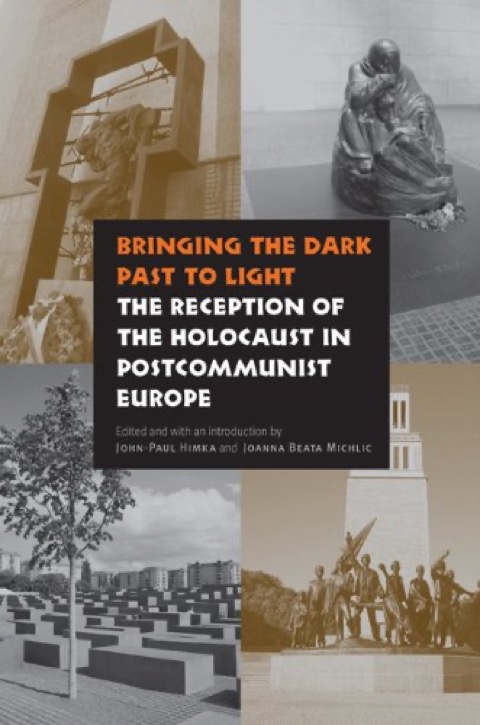
Bringing the Dark Past to Light: The Reception of the Holocaust in Postcommunist Europe
Applying the lessons from "Bringing the Dark Past to Light: The Reception of the Holocaust in Postcommunist Europe" by John-Paul Himka and Joanna Beata Michlic to your life can be a profound exercise in radical accountability and intellectual honesty. Here are some ways you might integrate these lessons:
-
Lead with Radical Honesty in Management: - In leadership and entrepreneurship, the tendency is to focus only on the "heroic" success story while burying the "dark past" of failed projects or cultural missteps. You must resist this urge and instead foster a culture where mistakes are audited with the same rigor as victories, ensuring that the organization learns from its actual history rather than a sanitized version of it.
-
Identify and Dismantle Personal Myths: - Just as nations create myths to protect their self-image, individuals often construct narratives that externalize blame for failures. You should practice the "stay humble" mantra by conducting a regular self-audit, identifying where you may be playing the victim to avoid acknowledging your own complicity in a project's failure or a strained professional relationship.
-
Navigate Complex Narratives in Law and VC: - In the worlds of venture capital and law, you are often presented with competing versions of the truth. This book teaches you to look for the "silences" in a pitch or a legal argument; understanding what is being omitted is often more important than what is being loudly proclaimed, allowing you to make decisions based on the full spectrum of reality.
-
The Ethical Burden of the Practitioner: - As a physician and attorney, you hold a position of public trust where silence can be a form of malpractice. Recognize that when systemic issues arise—whether in healthcare delivery or corporate ethics—staying silent to preserve the status quo is an active choice that favors the perpetrator over the victim; true leadership requires the courage to speak the uncomfortable truth.
-
Cultivate Cultural Intelligence in Global Health: - For initiatives like Tribal Health, it is crucial to recognize that historical trauma is not just a footnote but a present-day reality for many communities. You must approach every interaction with an awareness of the "dark past" of these populations, ensuring that your solutions are not just technically sound but also historically and culturally sensitive.
-
Resist the Urge to Equate Disparate Failures: - Avoid the trap of the "Double Genocide" logic in your own professional life—do not minimize a major ethical lapse by pointing to a different, unrelated grievance. You must address each crisis on its own terms with specific accountability, rather than using a "competition of victimhood" to dilute your responsibility for reform.
By integrating these lessons, you ensure that your legacy as a leader, physician, and entrepreneur is built on a foundation of integrity and transparency. Embracing the dark parts of your history, rather than hiding them, provides the necessary light to guide your future growth and prevents the repetition of past errors.
What the book covers
"Bringing the Dark Past to Light: The Reception of the Holocaust in Postcommunist Europe" by John-Paul Himka and Joanna Beata Michlic is a seminal scholarly anthology that explores the tumultuous process of historical reckoning in Central and Eastern Europe following the collapse of the Soviet Union. The book serves as a comprehensive survey of how former communist states have navigated the transition from state-mandated silence regarding the Holocaust to a more nuanced, though often contested, public memory. Through a series of national case studies, the editors examine the struggle between the desire to build new, heroic national identities and the ethical necessity of confronting local collaboration and complicity in the Nazi genocide.
Summary:
-
Breaking the Communist Silence: - Under communist regimes, the specific tragedy of the Jewish people was often minimized or folded into a broader narrative of "fascist victims" versus "socialist heroes." The book documents how the post-1989 era finally allowed for the emergence of Jewish-specific history, though this opening also invited fierce nationalist backlash and the resurgence of pre-war prejudices.
-
The Myth of the 'Blameless' Nation: - A recurring theme throughout the volume is the difficulty nations face when moving from a victim-only narrative to one that acknowledges internal participation in the Holocaust. Chapters on countries like Poland and Lithuania highlight the societal shock and defensive reactions that occur when historians present evidence of local citizens participating in pogroms or serving as auxiliary police for the Nazis.
-
The 'Double Genocide' Theory and Competition of Victimhood: - The contributors analyze the controversial "Double Genocide" theory, which posits that Soviet crimes were equivalent to Nazi crimes. In many postcommunist societies, this narrative is used to deflect from the Holocaust by emphasizing the nation's suffering under Stalinism, effectively creating a hierarchy of victimhood that obscures the unique nature of the Jewish experience.
-
Institutional Memory and Cultural Symbols: - The text examines the role of museums, monuments, and educational reforms in shaping the next generation’s understanding of the past. From the establishment of the POLIN Museum in Warsaw to the debated memorials in Hungary, the authors show how physical spaces become battlegrounds for national identity and historical truth.
-
Regional Variation in Reckoning: - The anthology provides a comparative look at diverse regions, noting that while some nations like the Czech Republic faced less resistance to Holocaust education, others like Ukraine and Romania have struggled more deeply with the legacies of nationalist figures who were both anti-Soviet heroes and anti-Semitic collaborators.
-
The Influence of Western Integration: - Several essays discuss how the desire to join the European Union and NATO acted as a catalyst for historical transparency. International diplomatic pressure often forced governments to adopt official days of remembrance and update school curricula, though these top-down changes did not always reflect a genuine shift in grassroots public opinion.
This volume is significant for its uncompromising look at the intersection of memory and politics, demonstrating that the "past" is never truly settled. It highlights the fragile nature of historical truth in the face of nationalist pride and serves as a vital resource for understanding the ethical complexities of building a democratic future on a foundation of suppressed trauma.