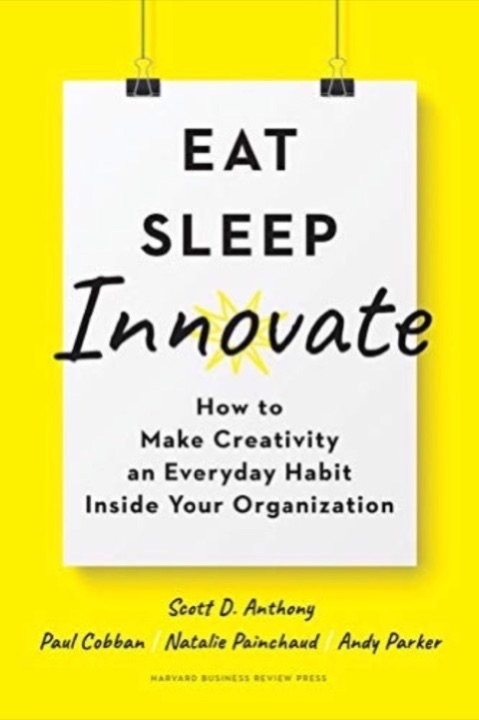
Eat, Sleep, Innovate: How to Make Creativity an Everyday Habit Inside Your Organization
Applying the lessons from "Eat, Sleep, Innovate" to your life can help you foster a personal culture of creativity and innovation, much like the book suggests for organizations. Here’s how you might integrate these principles into your daily routine and personal growth:
-
Adopt the BEAN Framework Personally: - Behavior Enablers: Identify tools and processes that can help you adopt new, creative habits. This could be setting aside dedicated time each day for creative pursuits, like writing or brainstorming new ideas, or using apps and resources that stimulate creative thinking. - Artifacts: Surround yourself with reminders of your creative goals. This could be inspirational quotes from thinkers you admire, like Marcus Aurelius or Theodore Roosevelt, or visual cues in your workspace that encourage innovative thinking. - Nudges: Set up subtle prompts to encourage creative behavior. This might include setting reminders to take breaks for creative thinking or using technology to track your progress on creative projects.
-
Create a Personal Culture of Innovation: - Model innovative behaviors in your daily life by embracing new experiences and learning opportunities. For instance, you could finally try skydiving or explore other activities that push your boundaries. - Encourage experimentation in your personal projects and hobbies. Allow yourself to fail and learn from those experiences, reinforcing the idea that failure is a stepping stone to growth.
-
Overcome Personal Barriers to Creativity: - Address any fears or resistance to change by creating a safe space for yourself to experiment and take risks. Reflect on past experiences where you overcame challenges, like your plane crash incidents, to remind yourself of your resilience. - Manage your time effectively to ensure you have space for creative pursuits amidst your busy schedule.
-
Leverage Your Strengths and Address Weaknesses: - Use your strengths, such as resilience, humor, and empathy, to fuel your creative endeavors. These qualities can help you approach problems from unique perspectives and connect with others in meaningful ways. - Work on your weaknesses, like impulsivity and lack of balance, by setting specific goals for improvement and regularly evaluating your progress.
-
Reflect and Adapt: - Regularly reflect on your creative journey and adapt your strategies as needed. Consider keeping a journal to document your thoughts, ideas, and progress, allowing you to see how small changes lead to significant improvements over time.
-
Integrate Creativity into Daily Routines: - Incorporate creative activities into your daily routine, such as reading, writing, or exploring new technologies. This can help make creativity a habit rather than a sporadic event.
-
Embrace Lifelong Learning: - Continue to approach personal growth with a mindset of being in a constant state of beta. Seek out new learning opportunities, whether through books, courses, or experiences, to keep your mind engaged and open to new ideas.
By applying these principles from "Eat, Sleep, Innovate" to your life, you can cultivate a personal environment where creativity and innovation thrive, helping you achieve your aspirations and make a positive impact on the world around you.
What the book covers
"Eat, Sleep, Innovate: How to Make Creativity an Everyday Habit Inside Your Organization" by Scott D. Anthony, Paul Cobban, Natalie Painchaud, and Andy Parker is a comprehensive guide on fostering a culture of innovation within organizations. The book emphasizes the importance of embedding creativity into the daily routines of employees to drive sustainable innovation.
Summary:
Introduction:
The authors introduce the concept of innovation as a habit rather than a sporadic event. They argue that for organizations to thrive in today's fast-paced world, innovation must be woven into the fabric of everyday work life.
The BEAN Framework:
Central to the book is the BEAN framework, which stands for Behavior Enablers, Artifacts, and Nudges. This framework is designed to help organizations systematically encourage innovative behaviors.
-
Behavior Enablers: These are tools and processes that make it easier for employees to adopt new behaviors. Examples include training programs, workshops, and access to resources that support creative thinking.
-
Artifacts: These are physical or digital objects that reinforce desired behaviors. Artifacts can be anything from posters and screensavers to digital dashboards that remind employees of innovation goals.
-
Nudges: These are subtle prompts that encourage employees to act in a certain way without being forceful. Nudges can include reminders, incentives, or changes in the environment that make innovative behavior more likely.
Creating a Culture of Innovation:
The authors discuss the importance of leadership in fostering an innovative culture. Leaders must model innovative behaviors and create an environment where experimentation is encouraged and failure is seen as a learning opportunity.
Overcoming Barriers:
The book identifies common barriers to innovation, such as fear of failure, lack of time, and resistance to change. It provides strategies to overcome these obstacles, including creating safe spaces for experimentation and rewarding risk-taking.
Case Studies:
Throughout the book, the authors provide numerous case studies from various industries to illustrate how the BEAN framework has been successfully implemented. These examples demonstrate the versatility and effectiveness of the framework in different organizational contexts.
Practical Tools and Techniques:
The book offers a range of practical tools and techniques to help organizations implement the BEAN framework. These include checklists, templates, and exercises designed to facilitate the integration of innovative habits into daily routines.
Key Takeaways and Lessons:
-
Innovation as a Habit: Innovation should be a continuous process embedded in the daily activities of an organization, not just a one-off event.
-
The Power of Small Changes: Small, incremental changes in behavior can lead to significant improvements in innovation over time.
-
Leadership is Crucial: Leaders play a vital role in setting the tone for innovation by modeling desired behaviors and creating an environment that supports creativity.
-
Embrace Failure: Organizations should view failure as an opportunity to learn and grow rather than a setback.
-
Use the BEAN Framework: The BEAN framework provides a structured approach to embedding innovation into an organization's culture through behavior enablers, artifacts, and nudges.
-
Tailor to Your Organization: While the BEAN framework is versatile, it should be adapted to fit the unique needs and context of each organization.
-
Continuous Improvement: Innovation is an ongoing process that requires regular reflection and adaptation to remain effective.
In conclusion, "Eat, Sleep, Innovate" provides a practical roadmap for organizations looking to make creativity and innovation a core part of their culture. By leveraging the BEAN framework and focusing on small, sustainable changes, organizations can foster an environment where innovation thrives.