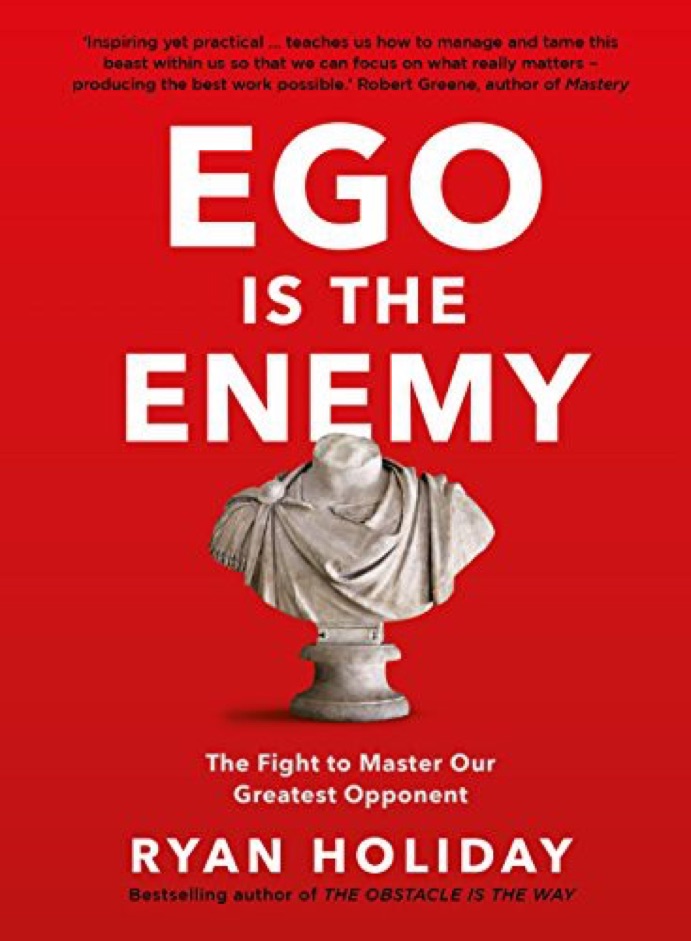
Ego Is the Enemy
Applying the lessons from "Ego Is the Enemy" by Ryan Holiday to your life can be a transformative exercise in building a resilient and high-impact career in medicine, business, or any demanding field. Here are some ways you might integrate these lessons:
- Adopt a Perpetual Student Mindset: - Whether you are an experienced surgeon, a veteran pilot, or a serial entrepreneur, you must approach every situation as if you have something to learn. By acknowledging that you do not know everything, you keep your skills sharp and avoid the complacency that often leads to catastrophic errors or stagnating ventures.
- Practice the Canvas Strategy in Leadership: - In your leadership roles, look for ways to clear the path for your team members. By helping others succeed and making your colleagues' lives easier, you build a foundation of goodwill and collective expertise that eventually propels your own organizations forward far more effectively than self-promotion.
- Manage Success with Sobriety: - When your ventures achieve high valuations or you receive public acclaim, resist the urge to believe you are infallible. Maintain the same rigor and discipline that you had during the lean years to ensure that your success is not just a fleeting spike but a sustainable legacy of excellence.
- Choose 'Alive Time' During Setbacks: - When a business deal falls through or a professional outcome is disappointing, do not let your ego turn into bitterness. Use that time to study, reflect, and improve your internal processes so that the period of difficulty becomes a catalyst for your next breakthrough rather than a period of wasted resentment.
- Prioritize Purpose Over Passion: - While passion is often flighty and ego-driven, a clear purpose provides a steady North Star for your career and personal life. Focus on the mission—whether it is improving healthcare access or mentoring others—rather than the personal accolades and credit that might come with the work.
- Exercise Restraint in High-Stakes Conflicts: - In legal disputes or intense negotiations, your ego will want to win at all costs to prove its dominance. Practice the restraint to seek the most rational outcome rather than the one that satisfies your pride, realizing that "winning" an ego battle often costs more in time and reputation than it is worth.
By integrating these lessons, you move beyond the fragile fluctuations of the ego and build a life of quiet confidence and enduring achievement. Staying hungry for growth while remaining humble in the face of success ensures that your impact on the world is both deep and lasting.
What the book covers
"Ego Is the Enemy" by Ryan Holiday is a philosophical exploration of the internal obstacles that prevent individuals from achieving and sustaining greatness. Drawing heavily on Stoic philosophy and historical anecdotes, Holiday argues that our own ego—the unhealthy belief in our importance—is the primary antagonist in every stage of our lives. The book serves as a practical guide for mastering one's own impulses to ensure that ambition is grounded in reality rather than vanity.
Summary:
- The Nature of the Enemy: - Holiday defines ego not through a Freudian lens, but as an arrogant obsession with one's self-image and a desire to be superior to others. It is the "malicious force" that replaces reality with a distorted sense of importance, making individuals fragile, resistant to feedback, and prone to overestimating their own capabilities.
- The Aspire Phase and the Student Mindset: - When starting a new endeavor, the ego often manifests as talk rather than action, providing a false sense of accomplishment through social validation. To combat this, Holiday emphasizes the "Student Mindset," where one remains a perpetual learner, acknowledging that there is always someone better to learn from regardless of one's initial talent.
- The Canvas Strategy: - A key technique for those early in their careers is to find ways to clear the path for others. By helping mentors and colleagues look good and perform better, you build a foundation of goodwill and gain access to high-level expertise that the ego would otherwise reject out of a misplaced sense of pride.
- The Dangers of Success: - Success is where ego becomes most dangerous because it breeds a sense of entitlement and the belief that past performance guarantees future results. Holiday uses examples like Howard Hughes to show how unchecked success leads to paranoia and a loss of the very discipline that created the success in the first place.
- Managing Failure and Resentment: - When things go wrong, the ego makes us defensive and prone to blaming external factors rather than reflecting on our own mistakes. The author introduces the concept of "Alive Time" vs. "Dead Time," urging readers to use periods of failure or stagnation as opportunities for active growth rather than passive wallowing.
- The Concept of Plus, Minus, Equals: - To maintain equilibrium, Holiday suggests that everyone needs a "Plus" (a mentor to learn from), a "Minus" (someone to teach), and an "Equals" (a peer to compete with). This structural approach to personal development prevents the ego from bloating by ensuring a constant cycle of humility, service, and challenge.
- Restraint and Sobriety: - In moments of triumph, the most difficult but necessary action is restraint and emotional sobriety. Maintaining a grounded perspective allows for sustainable achievement rather than the fleeting, ego-driven bursts of performance that often lead to public downfall or internal burnout.
The book's significance lies in its timeless reminder that character and work ethic are the only true defenses against the volatility of the world. By subduing the ego, individuals can build a life based on genuine contribution and lasting impact rather than the fragile pursuit of status.