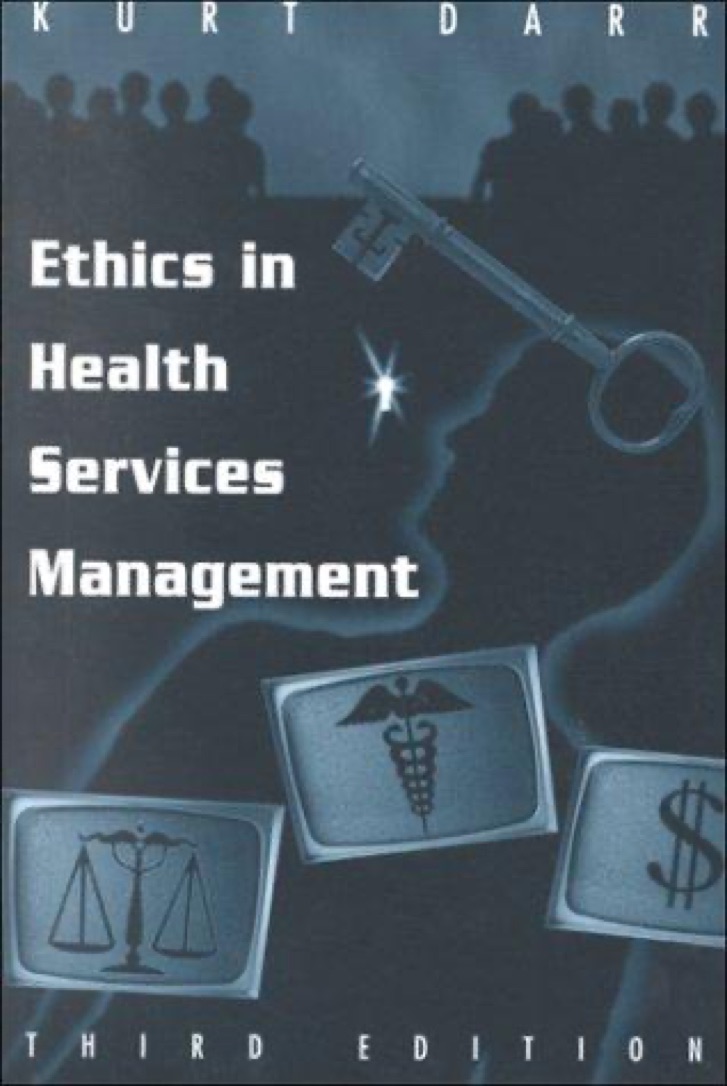
Ethics in Health Services Management
Applying the lessons from "Ethics in Health Services Management" by Kurt Darr to your life can be a transformative exercise in aligning your professional ambitions with a robust moral compass. Here are some ways you might integrate these lessons:
- Lead with Moral Clarity in Every Venture: - You should view your role as a healthcare leader and venture capitalist as a position of public trust rather than just a business endeavor. When evaluating a new healthcare startup or making a pivot in an existing company, you must ask if the decision upholds the dignity of the patient and the integrity of the profession, ensuring that your entrepreneurial drive never outpaces your ethical grounding.
- Differentiate Compliance from Character: - As both an attorney and a physician, you know the law provides a floor for behavior, not a ceiling. You must strive to lead your organizations to exceed legal minimums, fostering a culture where doing the "right thing" is valued more than just doing the "legal thing," thereby building a brand synonymous with unwavering integrity.
- Institutionalize the Mantra of Staying Humble: - You can use your influence to embed ethical safeguards into your companies' DNA from their inception. This involves creating transparent reporting structures and advisory boards that are empowered to challenge your own decisions, ensuring that your mantra of "Stay Humble" is a structural reality that keeps your organizations accountable to their mission.
- Navigate Resource Scarcity with Distributive Justice: - In the worlds of urgent care and private equity, resources like capital and clinical time are often limited. You should apply Darr’s frameworks to ensure that your allocation of these assets is done through a lens of fairness, prioritizing long-term patient outcomes and community health over short-term financial gains.
- Prioritize Stakeholder Autonomy in High-Stakes Environments: - Whether you are in the cockpit, the boardroom, or the emergency department, you must prioritize the autonomy of those you serve. This means creating systems that guarantee clear communication and informed consent, ensuring that patients, employees, and investors are treated as partners in a shared mission rather than as means to an end.
- Engage in Continuous Ethical Reflection: - Recognize that your ethical education is a lifelong pursuit that requires constant practice. By regularly auditing the "moral performance" of your past decisions—evaluating where you succeeded and where you fell short—you can refine your intuition and ensure that your legacy is defined by character as much as it is by innovation.
By integrating these lessons, you will develop a more resilient leadership style that can withstand the pressures of rapid growth and high-stakes medical and legal decision-making. Darr’s principles will help you build a legacy that is defined not only by the quantity of businesses you founded or the medical practices you led, but by the unwavering ethical standards you maintained throughout your journey as a physician, pilot, and entrepreneur.
What the book covers
"Ethics in Health Services Management" by Kurt Darr is a seminal exploration of the moral and professional duties that define healthcare leadership in a modern, complex society. It provides a bridge between high-level philosophical principles and the pragmatic, often grueling decisions faced by hospital administrators, clinical directors, and healthcare entrepreneurs. Through a blend of theoretical frameworks and practical case studies, Darr establishes that ethical management is the indispensable foundation upon which all quality medical delivery and organizational sustainability must be built.
Summary:
- Foundations of Ethical Theory: - Darr begins by grounding management in the primary Western ethical traditions, including deontology, utilitarianism, and virtue ethics. He argues that a leader cannot make consistent decisions without a firm grasp of these theories, which transform subjective "gut feelings" into structured, defensible moral reasoning for the organization.
- The Administrator as a Moral Agent: - The book posits that healthcare managers are not merely bureaucrats but moral agents with significant influence over the lives of others. This role requires a commitment to the four basic principles of bioethics: autonomy, beneficence, nonmaleficence, and justice, which must be applied to administrative choices just as strictly as they are to clinical ones.
- Professional Codes and Institutional Integrity: - Darr examines the critical role of professional associations, such as the American College of Healthcare Executives (ACHE), in setting behavioral standards. He emphasizes that internalizing these codes is essential for maintaining public trust and ensuring that the organization's culture remains aligned with its service-oriented mission.
- Patient Rights and Organizational Duties: - A major focus is placed on the manager's duty to protect patient autonomy, particularly regarding informed consent, confidentiality, and the right to refuse treatment. Darr provides strategies for ensuring these rights are respected even when they create operational challenges or financial strain for the facility.
- Organizational Ethics and Corporate Culture: - The text argues that the "tone at the top" is the most significant predictor of ethical behavior throughout a healthcare system. Leaders must institutionalize ethics by integrating values into mission statements, credentialing processes, and employee evaluations, creating a environment where integrity is expected at every level.
- The Role of Ethics Committees: - Darr provides a detailed blueprint for the formation and utilization of Institutional Ethics Committees (IECs). He describes their three primary functions—education, policy development, and clinical consultation—noting that they serve as a vital safety net for resolving complex disputes among patients, families, and staff.
- Bioethical Challenges in Modern Management: - The book addresses high-stakes issues such as end-of-life care, organ transplantation, and the use of emerging medical technologies. It highlights the manager’s responsibility to stay informed about these developments and to facilitate a multidisciplinary approach to the ethical dilemmas they inevitably generate.
- Legal vs. Ethical Boundaries and Resource Allocation: - Darr clarifies the distinction between law and ethics, reminding managers that the law often represents only a minimum standard of conduct. He offers frameworks for the fair allocation of scarce resources, pushing leaders to move beyond mere legal compliance toward a standard of excellence and distributive justice.
The enduring significance of "Ethics in Health Services Management" lies in its insistence that administrative work in healthcare is a moral vocation rather than a purely technical or financial one. By centering the human dignity of the patient and the integrity of the practitioner, Darr provides a timeless compass for navigating the turbulent intersection of medicine, business, and law.