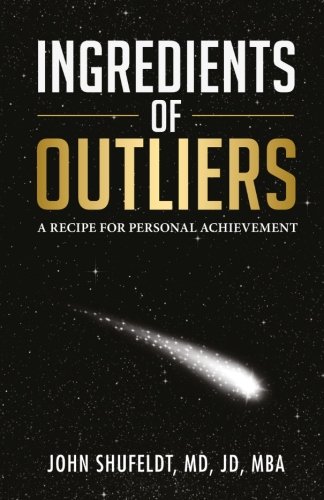
Ingredients of Outliers: A Recipe for Personal Achievement
Applying the lessons from "Ingredients of Outliers: A Recipe for Personal Achievement" by John Shufeldt to your life can be a transformative process that redefines your ceiling for success. Here are some ways you might integrate these lessons:
- Master the Ego: - You must learn to check your ego at the door, whether you are leading a medical team or a corporate board. By remaining humble, you ensure that the best ideas—rather than the loudest voices—prevail, protecting your organization from the blind spots that often lead to catastrophic errors in high-stakes environments.
- Commit to Continuous Multi-Disciplinary Education: - You should actively seek knowledge outside of your primary expertise to foster outlier-level creativity. If you are a physician, study the safety systems of aviation; if you are an entrepreneur, study the precision of law. This cross-pollination of ideas allows you to solve complex problems that baffle specialists.
- Develop a Resilience Protocol: - You must expect and plan for failure by viewing every setback as "tuition" for your future success. By reframing a business closure or a career hurdle as a necessary learning experience, you build the grit required to sustain a long and varied career across multiple industries.
- Embrace Calculated Risks in Leadership: - Identify areas where you have been playing it too safe and begin taking risks where the potential upside outweighs the downside. In entrepreneurship and medicine alike, progress requires the courage to step into the unknown once you have done the foundational work to mitigate unnecessary danger.
- Prioritize Radical Preparation for Performance: - You must treat every routine task as a rehearsal for a high-pressure moment. Outliers do not rise to the occasion; they sink to the level of their training, so your success in the courtroom or the operating room is determined by the work you do when no one is watching.
- Foster Emotional Intelligence and Empathy: - Focus on building genuine connections with your team and peers through active listening and emotional resonance. Recognizing that no outlier achieves greatness in isolation, you must prioritize the human element of leadership to ensure your professional achievements are sustainable and meaningful.
By integrating these lessons, you move beyond the pursuit of mere competence and begin a deliberate journey toward true mastery and exceptionalism. Shufeldt’s recipe reminds you that while the path to becoming an outlier is rigorous, it is built on foundational character traits that you have the power to cultivate every single day.
What the book covers
"Ingredients of Outliers: A Recipe for Personal Achievement" by John Shufeldt is an insightful exploration of the psychological and behavioral patterns that define exceptionally successful individuals across various disciplines. Drawing from his own multifaceted career in medicine, law, aviation, and business, Shufeldt identifies specific traits—what he terms "ingredients"—that allow certain people to transcend mediocrity and achieve "outlier" status. The book functions as both a motivational guide and a practical manual for anyone looking to cultivate the habits necessary for high-level performance and lasting impact.
Summary:
- The Foundation of Humility: - Shufeldt argues that humility is the most essential ingredient for an outlier, acting as the bedrock for all other personal growth. He posits that true achievers maintain a "hungry and humble" mindset, which allows them to remain open to feedback and acknowledge their limitations without ego getting in the way of progress.
- The Power of Intellectual Curiosity: - Outliers are defined by an insatiable desire to understand the world around them and a refusal to stop asking "why." The book explains that this lifelong curiosity is what drives innovation and allows individuals to spot connections and opportunities that others frequently overlook.
- Optimism as a Strategic Advantage: - Shufeldt describes optimism not as naive wishful thinking, but as a deliberate choice to focus on solutions rather than obstacles. This strategic positivity enables leaders to maintain high morale during crises and envision a path forward when the environment is filled with uncertainty or negativity.
- The Role of Calculated Risk-Taking: - The narrative differentiates between reckless gambling and the calculated risks taken by high achievers. Shufeldt emphasizes that outliers are willing to step out of their comfort zones because they have prepared extensively and weighed the potential outcomes, viewing discomfort as a prerequisite for entrepreneurial success.
- Persistence and Grit: - Success is rarely a linear path, and Shufeldt highlights persistence as the engine that keeps outliers moving through inevitable setbacks. He shares stories of historical figures and personal anecdotes to demonstrate how viewing failure as a data point rather than a final verdict is key to long-term achievement.
- The Necessity of Radical Preparation: - While many observers focus on a person's "big break," the book argues that outliers spend the majority of their time in the "quiet" phases of preparation. Shufeldt notes that whether in the emergency room or the cockpit, peak performance is the direct result of thousands of hours of unseen practice and study.
"Ingredients of Outliers" is a significant work because it democratizes the concept of greatness, shifting the focus from innate talent to attainable character traits. By breaking down the complex anatomy of success into discrete, actionable habits, Shufeldt provides a roadmap for personal evolution that is applicable to any field of endeavor.