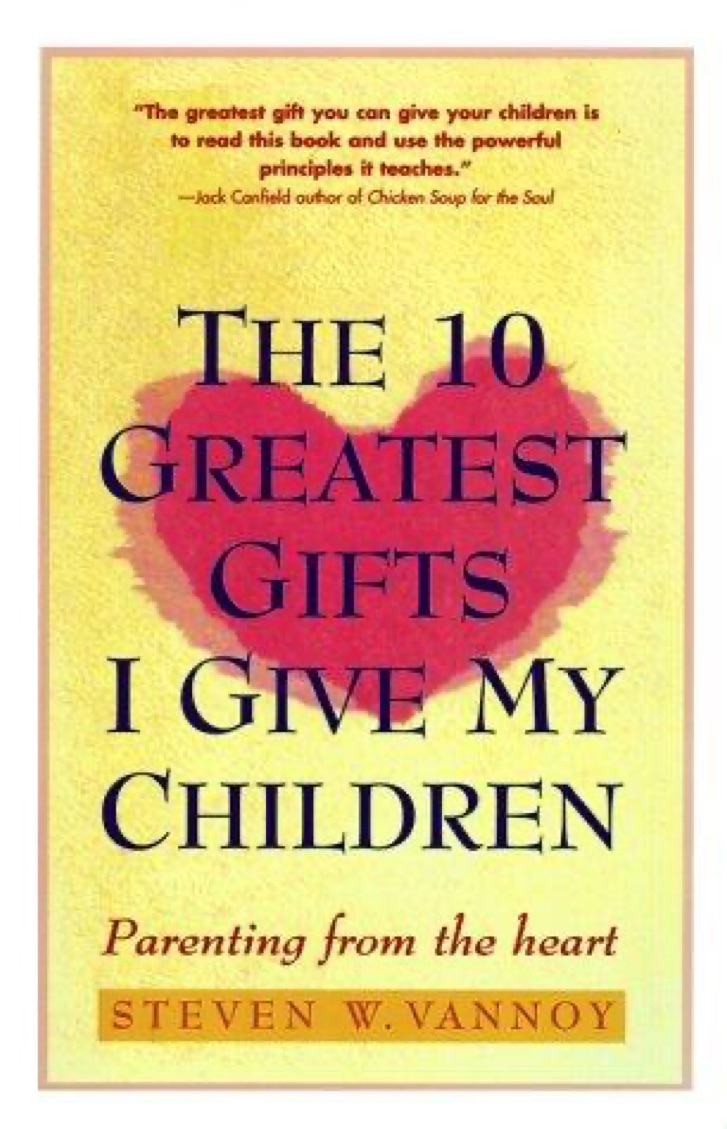
The 10 Greatest Gifts I Give My Children: Parenting from the Heart
Applying the lessons from "The 10 Greatest Gifts I Give My Children: Parenting from the Heart" by Steven W. Vannoy to your life can be a powerful way to enhance your relationships, whether in the home, the emergency room, or the boardroom. Here are some ways you might integrate these lessons:
- Lead Through Influence Rather Than Authority: - Just as in entrepreneurship or a high-stakes clinical setting, true leadership comes from the ability to inspire and influence others rather than relying on hierarchy. By focusing on building trust and modeling the behavior you want to see, you create a culture—whether in a family or a VC firm—where people feel empowered to do their best work because they respect the mission.
- Implement a "Checklist" for Emotional Intelligence: - Similar to the rigorous pre-flight checks used in aviation, you can use Vannoy’s ten gifts as a mental checklist for your daily interactions. Regularly evaluating whether you are communicating clearly, acting with integrity, and showing forgiveness helps maintain the "emotional airworthiness" of your professional and personal life, preventing small conflicts from escalating into systemic failures.
- Foster a Culture of Curiosity in Innovation: - As a serial entrepreneur, you can apply the gift of curiosity to your business ventures by encouraging "out of the box" thinking and questioning the status quo. When you treat curiosity as a core value, you create an environment where your team feels safe to experiment and learn from failure, which is essential for growth in medicine and venture capital.
- Practice Active Forgiveness to Maintain Resilience: - In high-stress environments like the ER or the courtroom, mistakes are inevitable and tensions often run high. Adopting the gift of forgiveness allows you to address errors constructively, learn the necessary lessons, and move forward without carrying the toxic weight of blame, which is vital for preventing burnout and maintaining long-term high performance.
- Prioritize Integrity as Your North Star: - In the complex worlds of law and medicine, your reputation and character are your most valuable assets. Consistently choosing the "hard right" over the "easy wrong" reinforces the gift of integrity, ensuring that your legacy as a leader and a parent is built on a foundation of trust and ethical excellence.
By integrating these lessons, you move closer to the ideal of the "Stay Hungry, Stay Humble" mantra, recognizing that personal growth is a continuous journey. These gifts are not just for children; they are the hallmarks of a life well-lived and a legacy that transcends professional achievements, ensuring that your influence is felt long after the business deal is closed or the shift ends.
What the book covers
"The 10 Greatest Gifts I Give My Children: Parenting from the Heart" by Steven W. Vannoy is a transformative guide that shifts the focus of child-rearing from reactive discipline and external control to proactive connection and internal character building. The book provides a practical roadmap for parents to instill core values through intentional interactions, helping children navigate life with emotional resilience. Vannoy combines personal anecdotes with actionable exercises to help parents create a supportive environment where children can thrive socially, emotionally, and ethically.
Summary:
- The Shift from Control to Influence: - Vannoy argues that traditional parenting often relies on fear-based control, which creates distance between parent and child. He proposes a shift toward influence, which is built on a foundation of trust, respect, and unconditional love rather than power struggles. - By focusing on influence, parents can guide their children’s internal decision-making processes rather than just policing their external behavior. This transition requires parents to examine their own triggers and emotional responses to ensure they are leading from the heart rather than from a place of frustration or authority.
- Nurturing Self-Esteem and Communication: - The first gifts focus on providing a child with a sense of worth and the tools to express themselves. Vannoy emphasizes that self-esteem is the bedrock of a child's future success, resilience, and willingness to tackle challenges. - Effective communication involves active listening and creating a "safe zone" where children feel comfortable sharing their thoughts without fear of immediate judgment. This two-way street helps children develop the vocabulary for their emotions and the confidence to advocate for themselves in the world.
- The Role of Humor and Integrity: - Vannoy highlights humor as a vital tool for diffusing tension and building bonds, while integrity serves as the child's internal compass. He suggests that these traits are caught more often than they are taught. - Integrating humor into daily life helps maintain perspective and reduces the stress of high-pressure parenting moments. Meanwhile, teaching integrity involves modeling honesty and accountability, showing children that their word is their bond and that character is built through consistent, principled actions.
- Cultivating Curiosity and Forgiveness: - The author suggests that fostering a child's natural curiosity keeps them engaged with the world, while teaching forgiveness prevents them from being weighed down by resentment. Both gifts are essential for maintaining a growth mindset throughout life. - Encouraging curiosity involves allowing children to ask "why" and explore their interests without rigid constraints, which fuels lifelong learning. Forgiveness is presented as a gift to oneself, teaching children how to release anger and move forward after conflicts, both with others and with themselves.
- Discipline, Responsibility, and Hope: - Vannoy redefines discipline as a teaching tool rather than punishment, pairing it with responsibility to build maturity and agency. He positions hope as the fuel that keeps children moving forward through adversity. - True discipline focuses on self-regulation and understanding consequences, rather than blind obedience. By giving children age-appropriate responsibilities, parents help them develop the realization that their actions have a tangible impact on their surroundings, fostering a sense of competence.
- The Foundation of Unconditional Love: - The final and most significant gift is the assurance of love that is not predicated on performance, grades, or behavior. This provides the psychological safety net necessary for exploration. - This foundational gift provides the security a child needs to take risks and fail safely. When a child knows they are loved for who they are, not what they do, they develop the emotional stability required to navigate the complexities of adulthood with grace and confidence.
The significance of Vannoy’s work lies in its ability to translate abstract values into daily parenting practices. It moves beyond "quick fix" behavioral tips to address the long-term emotional health of the family unit, ensuring that children grow into adults who are both capable and compassionate.