Market Driven Health Care
Applying the lessons from "Market-Driven Health Care" by Regina Herzlinger to your life involves embracing the principles of consumer empowerment, competition, innovation, and transparency in various aspects of your personal and professional endeavors. Here’s how you might integrate these concepts:
-
Consumer Empowerment: - Just as Herzlinger advocates for empowering healthcare consumers with information and choice, you can apply this principle by ensuring you are well-informed and proactive in your personal and professional decisions. This could mean seeking out diverse perspectives and information before making decisions, whether in your career, personal life, or health-related matters.
-
Embrace Competition and Innovation: - In your professional life, especially in the medical field, you can foster a spirit of competition and innovation by continuously seeking ways to improve your skills and knowledge. This could involve staying updated with the latest medical advancements, technologies, and practices to provide the best care possible. - In your personal life, you might apply this by exploring new hobbies or activities, such as your interest in skydiving, to keep challenging yourself and fostering personal growth.
-
Transparency and Communication: - Herzlinger emphasizes the importance of transparency in healthcare. You can apply this by being open and honest in your communications with others, whether in personal relationships or professional settings. This aligns with your direct and humorous communication style, ensuring clarity and understanding in your interactions.
-
Specialization and Focus: - The concept of "focused factories" in healthcare can be translated into your life by identifying and honing your unique strengths and areas of expertise. Whether it’s in your medical practice, advocacy work, or personal interests, focusing on what you do best can lead to greater efficiency and impact.
-
Policy and Advocacy: - Herzlinger’s call for policy changes to support market-driven healthcare can inspire you to advocate for changes in areas you are passionate about, such as social equality and anti-human trafficking. Your involvement in activism can be guided by the principles of transparency, consumer choice, and competition to drive meaningful change.
-
Continuous Learning and Adaptation: - Embrace a mindset of lifelong learning, as you already do, by staying open to new ideas and adapting to changes in your environment. This aligns with your belief in being in a constant state of beta and striving for personal growth.
By integrating these principles into your life, you can enhance your ability to make informed decisions, foster innovation, and advocate for positive change in both your personal and professional spheres.
What the book covers
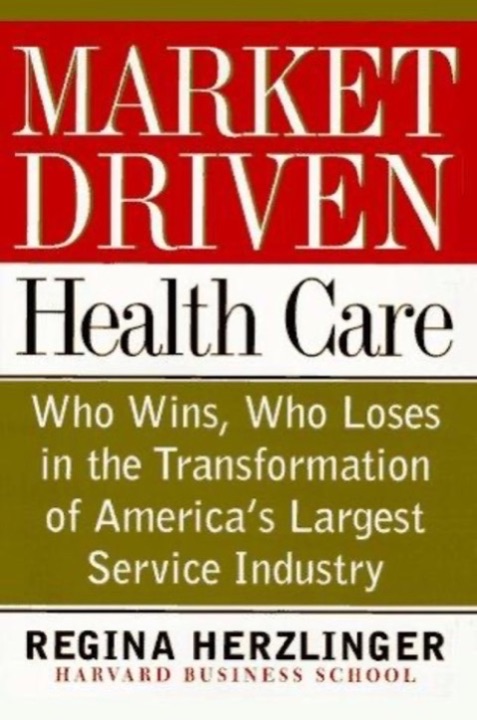
"Market-Driven Health Care: Who Wins, Who Loses in the Transformation of America's Largest Service Industry" by Regina Herzlinger is a seminal work that explores the dynamics of the healthcare industry through the lens of market forces. Herzlinger, a professor at Harvard Business School, argues for a consumer-driven approach to healthcare, emphasizing the role of competition, innovation, and consumer choice in improving the quality and efficiency of healthcare services.
Summary:
-
Introduction to Market-Driven Healthcare: - Herzlinger begins by critiquing the traditional healthcare system, which she describes as inefficient, costly, and often unresponsive to consumer needs. She argues that the system is dominated by providers and insurers rather than patients. - The book introduces the concept of market-driven healthcare, where consumers have more control over their healthcare decisions, leading to increased competition and innovation among providers.
-
The Role of Consumers: - Herzlinger emphasizes the importance of empowering consumers with information and choice. She argues that informed consumers can drive demand for higher quality and more cost-effective healthcare services. - The book discusses the potential of consumer-driven health plans (CDHPs) and health savings accounts (HSAs) to give consumers more financial responsibility and decision-making power.
-
Innovation and Competition: - The author explores how competition can spur innovation in healthcare delivery, technology, and management. She highlights examples of successful healthcare organizations that have embraced market-driven principles. - Herzlinger discusses the role of specialized healthcare providers, or "focused factories," which concentrate on specific medical conditions or procedures to achieve higher efficiency and better outcomes.
-
Barriers to Market-Driven Healthcare: - The book identifies several barriers to implementing a market-driven healthcare system, including regulatory constraints, entrenched interests of existing providers, and the complexity of healthcare information. - Herzlinger argues for policy changes that would facilitate transparency, competition, and consumer choice.
-
Case Studies and Examples: - Throughout the book, Herzlinger provides case studies of organizations and systems that have successfully implemented market-driven principles. These examples illustrate the potential benefits of a consumer-focused approach.
-
Policy Recommendations: - Herzlinger offers several policy recommendations to support the transition to a market-driven healthcare system. These include promoting transparency in pricing and quality, encouraging the development of specialized providers, and reforming insurance markets to support consumer choice.
Key Takeaways and Lessons:
-
Consumer Empowerment: Empowering consumers with information and choice is crucial for driving improvements in healthcare quality and efficiency. When consumers have the ability to make informed decisions, they can influence the market to provide better services at lower costs.
-
Importance of Competition: Competition among healthcare providers can lead to innovation and improved services. By fostering a competitive environment, healthcare organizations are incentivized to improve quality and reduce costs.
-
Role of Specialized Providers: Focused factories or specialized providers can deliver higher quality care by concentrating on specific areas of expertise. This specialization can lead to better outcomes and more efficient use of resources.
-
Need for Transparency: Transparency in pricing and quality is essential for a functioning market-driven healthcare system. Consumers need access to clear and accurate information to make informed choices.
-
Policy Support: Effective policy changes are necessary to overcome barriers to market-driven healthcare. This includes regulatory reforms, support for consumer-driven health plans, and initiatives to increase transparency and competition.
Overall, "Market-Driven Health Care" advocates for a transformation of the healthcare system that prioritizes consumer choice and market principles. Herzlinger’s work remains influential in discussions about healthcare reform, offering insights into how market dynamics can be harnessed to improve healthcare delivery.