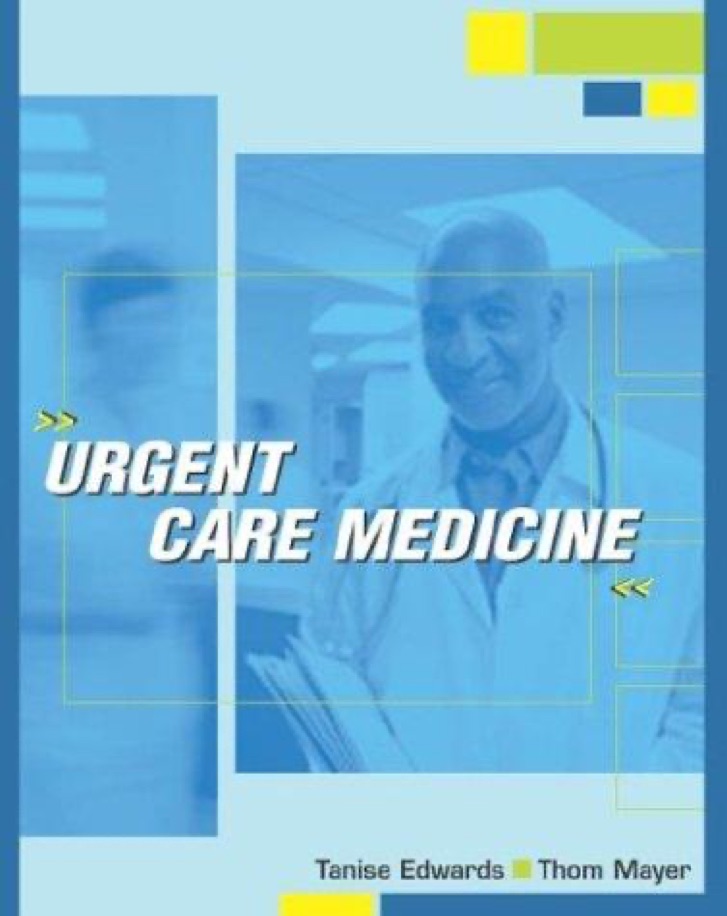
Urgent Care Medicine
Applying the lessons from "Urgent Care Medicine" by Tanise Edwards and Thom A. Mayer to your life can be a powerful exercise in learning to navigate complex systems while maintaining a commitment to high-speed excellence and patient safety. Here are some ways you might integrate these lessons:
-
Master the Art of the "Quick-Pivot": - In your professional life, whether in the cockpit or the clinic, you must develop the ability to rapidly triage information and decide which tasks require your immediate focus versus which can wait. This involves sharpening your "red-flag" detection—learning to ignore the noise and hone in on the high-stakes variables that determine success or failure.
-
Optimize Systems for Frictionless Flow: - As an entrepreneur, you should evaluate your business processes through the lens of "urgent care efficiency." Look for bottlenecks in your "customer journey" and apply the authors’ principles of streamlined operations to ensure that you are delivering value quickly without sacrificing the quality of the final product.
-
Cultivate a High-Agility Skill Set: - Just as the urgent care clinician must be a generalist capable of handling both orthopedics and infectious disease, you should strive to be a "T-shaped" leader. Maintain a broad base of knowledge across law, business, and medicine, allowing you to synthesize information from diverse fields to solve problems that a narrow specialist might miss.
-
Prioritize Risk Mitigation through Clarity: - In both medicine and law, documentation and clear communication are your greatest protections. You can apply this by ensuring that every major decision you make is backed by a clear rationale and that your "follow-up" procedures—whether in a business deal or a medical case—are robust enough to prevent small errors from becoming catastrophic failures.
-
Balance Technical Proficiency with Human Empathy: - The book emphasizes that a patient's perception of care is as important as the clinical outcome. You should apply this "Stay Humble" philosophy by remembering that your expertise is most effective when it is paired with genuine empathy and a commitment to serving the person behind the problem.
-
Commit to Constant Readiness: - Success in an episodic environment requires being prepared for the unexpected at all times. You can integrate this by maintaining a state of "chronic unease" regarding potential risks, ensuring that your teams are trained, your equipment is ready, and your mindset is focused on the next challenge before it arrives.
By integrating these lessons, you can build organizations and personal habits that thrive in the "middle ground" of life—the space where high-stakes decisions must be made with limited time, requiring a unique blend of clinical precision, entrepreneurial vision, and legal foresight.
What the book covers
"Urgent Care Medicine" by Tanise Edwards and Thom A. Mayer is a foundational clinical and operational textbook that defines the standards of practice for the burgeoning field of urgent care. It provides a comprehensive framework for clinicians and administrators navigating the high-volume, fast-paced environment that bridges the gap between primary care and the emergency department. The book serves as both a medical guide for acute presentations and a strategic manual for optimizing patient flow and safety in a specialized ambulatory setting.
Summary:
-
The Urgent Care Model and Philosophy: - The authors define urgent care as a distinct medical specialty focused on the immediate evaluation and treatment of acute illnesses and injuries that are not life-threatening but require prompt attention. They emphasize the "convenience-driven" nature of the model, which prioritizes accessibility, extended hours, and a broad clinical scope to alleviate pressure on hospital emergency rooms. - This section explores the patient-centric philosophy of the field, highlighting the importance of balancing clinical rigor with a retail-oriented mindset to meet consumer expectations for efficiency and transparency.
-
Triage and Clinical Decision-Making: - Edwards and Mayer outline the critical process of "screening triage," where staff must rapidly identify patients who are too sick for the urgent care environment and require immediate transfer to an ER. They provide protocols for identifying red-flag symptoms in a setting that lacks the high-level diagnostic resources of a major hospital. - The text emphasizes the "fast-track" mentality, encouraging clinicians to streamline assessments without compromising diagnostic accuracy, particularly during peak volume periods.
-
Management of Acute Medical Conditions: - A significant portion of the book details the management of common urgent care presentations, including respiratory infections, gastrointestinal distress, and infectious diseases. The authors provide evidence-based guidelines for antibiotic stewardship and the management of chronic conditions that present with acute exacerbations. - Detailed clinical pathways are provided for common complaints such as chest pain and abdominal pain, focusing on the careful exclusion of catastrophic outcomes while avoiding unnecessary over-testing.
-
Minor Trauma and Orthopedic Care: - The authors discuss the essential role of urgent care in treating musculoskeletal injuries, providing practical advice on splinting, casting, and initial fracture management. They highlight the technical skills required for wound care, including advanced suturing techniques and the management of minor burns or animal bites. - This section stresses the need for clinicians to be proficient in reading basic radiography and determining when a specialist orthopedic referral is necessary for long-term recovery.
-
Pediatric Urgent Care Specifics: - Recognizing that children represent a significant portion of urgent care volume, the book dedicates space to pediatric-specific triage and treatment. It covers the management of common childhood ailments like croup, bronchiolitis, and febrile seizures, while addressing the unique communication needs of parents and caregivers. - The authors provide guidance on weight-based dosing and pediatric equipment standards essential for any facility catering to younger populations.
-
Operational Excellence and Risk Management: - Beyond clinical care, the text dives into the business of urgent care, covering topics such as facility design, staffing models, and legal compliance. The authors discuss the "marketing" of medical services and how to maintain high patient satisfaction scores in a high-stress environment. - Risk management is treated as a core competency, with strategies for thorough documentation and follow-up procedures to mitigate malpractice risks associated with the episodic nature of urgent care.
Ultimately, this book is significant because it was one of the first comprehensive attempts to formalize urgent care as a discipline. It remains a vital reference for healthcare entrepreneurs and clinicians who seek to master the intersection of medical quality and operational efficiency.