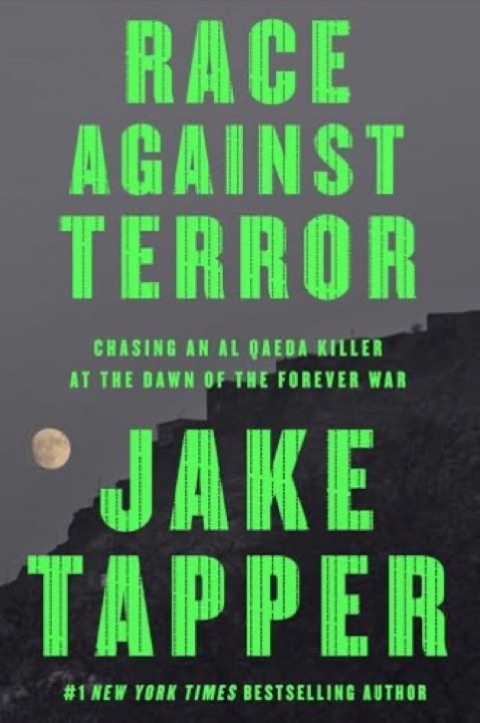
Race Against Terror: Chasing an Al Qaeda Killer at the Dawn of the Forever War
Applying the lessons from "Race Against Terror: Chasing an Al Qaeda Killer at the Dawn of the Forever War" by Jake Tapper to your life can be a powerful catalyst for enhancing your professional discipline and systemic thinking. Here are some ways you might integrate these lessons:
- Relentless Pursuit of Resolution: - You should treat your long-term goals with the same tenacity as a decade-old investigation, recognizing that "cold" leads in business or medicine often just require a fresh perspective and renewed energy. In entrepreneurship, success frequently depends on your willingness to pursue an objective long after others have deemed it impossible or irrelevant.
- Managing Complexity through Precision: - As a leader, you must develop the ability to synthesize fragmented data into a coherent and actionable strategy, much like the prosecutors who built a case from disparate military logs. Whether you are navigating a legal settlement or a clinical emergency, your success depends on your capacity to remain detail-oriented while under extreme systemic pressure.
- Building Cross-Disciplinary Bridges: - You can improve your organizational impact by fostering deeper cooperation between disparate departments, mirroring the way FBI agents and military personnel had to align their vastly different operational cultures. Effective leadership requires the humility to seek expertise outside your primary domain to solve problems that are too complex for any single discipline.
- Resilience in High-Stakes Environments: - You should embrace the "Stay Hungry, Stay Humble" mantra by maintaining your focus on the mission even when the institutional odds are stacked against you. In aviation and emergency medicine, just as in the legal pursuit of terrorists, the ability to remain calm and process-driven during a crisis is the primary differentiator between failure and success.
- The Value of Documentation and Records: - You must recognize that the quality of your future success often rests on the meticulousness of your current record-keeping. Just as decades-old logs were the key to justice in Tapper's narrative, your commitment to rigorous documentation in law, medicine, and business serves as the ultimate safeguard against future uncertainty and institutional drift.
- Understanding the "Why" Behind Extremes: - You should invest time in understanding the root causes of radical shifts in your industry or team dynamics rather than simply reacting to the symptoms. By analyzing the "radicalization" of problems—whether they are market disruptions or team conflicts—you can intervene more effectively before they escalate into systemic crises.
By integrating these lessons, you will cultivate a leadership style defined by strategic patience, operational excellence, and an unwavering commitment to integrity. Tapper’s account underscores that whether you are in the courtroom, the cockpit, or the boardroom, the most enduring victories are achieved through a combination of meticulous preparation and the courage to see a difficult journey through to its conclusion.
What the book covers
"Race Against Terror: Chasing an Al Qaeda Killer at the Dawn of the Forever War" by Jake Tapper is a meticulous and high-stakes narrative history that explores the unprecedented decade-long quest to bring a terrorist to justice. Tapper chronicles the intersection of the Arab Spring and the ongoing legacy of the War on Terror, focusing on a self-confessed killer whose crimes occurred on a remote battlefield years prior. The book provides a rare, behind-the-scenes look at how federal prosecutors and FBI agents navigate a landscape where traditional evidence is non-existent and the geopolitical stakes are immense.
Summary:
- The Unexpected Surrender: - In the midst of the 2011 Arab Spring, a man with ties to Al Qaeda turned himself into authorities and confessed to killing American soldiers in Afghanistan a decade earlier. This sudden admission presented an immediate crisis for the American justice system: while they had a killer who admitted to his crimes, they had virtually no physical evidence or witnesses from the chaotic, distant battlefields where the murders took place.
- The Legal Architects: - Federal prosecutors Dave Bitkower and Shreve Ariail are tasked with the daunting responsibility of building a case from a "no-body, no-evidence" scenario. Tapper describes how these legal minds had to devise a strategy that could survive the rigors of a U.S. federal court while relying on fragmented military records and intelligence that was never intended for use in a criminal trial.
- Piecing Together the Battlefield: - The investigation required a grueling forensic reconstruction of specific, small-unit engagements in the mountains of Afghanistan from the early 2000s. Investigators had to locate former soldiers, many of whom had moved on with their lives or were still dealing with the trauma of combat, to provide the eyewitness testimony necessary to corroborate the killer’s self-incriminating statements.
- Navigating Global Intelligence: - Tapper follows the investigative team across thousands of miles, detailing the complex diplomatic and logistical hurdles of coordinating with foreign intelligence agencies. The narrative reveals the delicate dance of international cooperation, particularly with European authorities who had their own records regarding the suspect’s radicalization and movements.
- The Evolution of a Radical: - A significant portion of the book is dedicated to understanding the suspect’s descent into extremism, providing a chilling look at the radicalization process during the dawn of the "Forever War." Tapper explores the ideological drivers and the specific networks that allowed an individual to transition from an ordinary life to a committed combatant for Al Qaeda.
- Justice in a Civilian Court: - The story culminates in a high-tension legal battle that tests the resilience of the American judiciary when dealing with war crimes. Tapper illustrates the tension between national security secrecy and the transparency required by the Constitution, ultimately arguing that the pursuit of justice in a civilian setting is a vital component of national strength and moral clarity.
This work serves as a powerful reminder of the endurance required to uphold the rule of law in an age of asymmetric warfare. By spotlighting the unsung efforts of prosecutors and investigators, Tapper reveals that the real "race against terror" is often won not just on the battlefield, but through the patient, meticulous application of justice and the refusal to let cold cases fade into history.