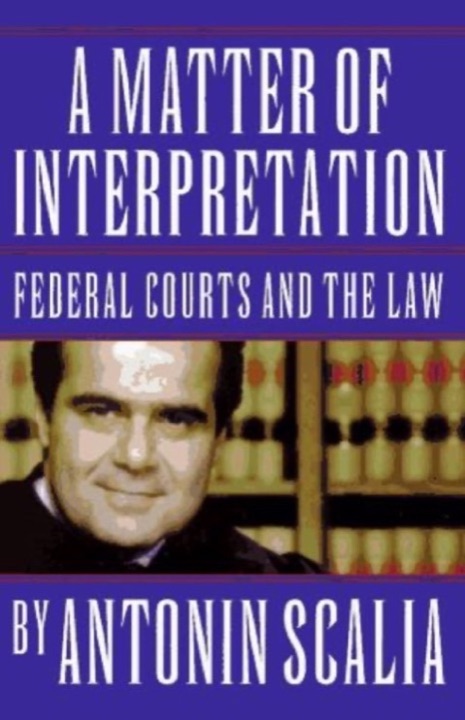
A Matter of Interpretation: Federal Courts and the Law
Applying the lessons from Antonin Scalia's "A Matter of Interpretation" to your life can be insightful, especially given your values and experiences. Here are a few ways you might integrate these lessons:
-
Textualism and Clarity in Communication: - Just as Scalia emphasizes the importance of adhering to the text, you can apply this principle by ensuring your communication is clear and precise. This aligns with your direct communication style and can help avoid misunderstandings in both personal and professional interactions.
-
Judicial Restraint and Personal Boundaries: - Scalia's advocacy for judicial restraint can translate into setting personal boundaries. Just as judges should not overstep their roles, you can ensure that you respect others' boundaries and expect the same in return, maintaining healthy relationships.
-
Separation of Powers and Role Clarity: - The concept of separation of powers can be applied to your various roles in life—whether as a parent, grandparent, physician, or friend. Understanding and respecting the distinct responsibilities and limits of each role can help you balance them effectively.
-
Critique of Legislative Intent and Avoiding Assumptions: - Scalia's critique of relying on legislative intent can remind you to avoid making assumptions about others' intentions. Instead, focus on their words and actions, which aligns with your value of empathy and understanding.
-
Engagement with Differing Viewpoints: - The book's inclusion of responses from other scholars highlights the importance of engaging with differing viewpoints. This can encourage you to continue valuing diverse perspectives, fostering open-mindedness and growth in your personal and professional life.
-
Principled Decision-Making: - Scalia's textualism is about principled interpretation. Similarly, you can apply a principled approach to decision-making, guided by your core values of kindness and empathy, ensuring consistency and integrity in your actions.
-
Respect for Democratic Processes: - Just as Scalia respects democratic processes, you can apply this lesson by valuing collaboration and consensus-building in group settings, whether in your advocacy work or personal relationships.
By integrating these lessons, you can enhance your approach to communication, decision-making, and relationships, aligning them with your values and experiences.
What the book covers
"A Matter of Interpretation: Federal Courts and the Law" by Antonin Scalia is a seminal work that explores the philosophy of textualism in legal interpretation. Published by Princeton University Press, the book is based on Scalia's Tanner Lectures at Princeton University and includes responses from other legal scholars, providing a comprehensive discussion on the topic.
Summary:
1. Introduction to Textualism: Scalia begins by outlining his judicial philosophy of textualism, which emphasizes interpreting legal texts, such as statutes and the Constitution, based on their ordinary meaning at the time they were written. He argues against the use of legislative history and the intentions of lawmakers, advocating instead for a focus on the text itself.
2. Critique of Legislative Intent: Scalia critiques the reliance on legislative intent, arguing that it is often indeterminate and can lead to judicial activism. He believes that judges should not infer intentions that are not explicitly stated in the text, as this can lead to subjective interpretations and undermine the rule of law.
3. The Role of Judges: Scalia discusses the role of judges in a democratic society, emphasizing that their duty is to apply the law as written, not to legislate from the bench. He warns against the dangers of judicial overreach and stresses the importance of adhering to the separation of powers.
4. Responses from Legal Scholars: The book includes responses from several legal scholars, including Gordon S. Wood, Laurence H. Tribe, Mary Ann Glendon, and Ronald Dworkin. These responses provide a range of perspectives, from supportive to critical, on Scalia's textualist approach.
5. Scalia's Rebuttal: In the final section, Scalia responds to the critiques offered by the scholars. He defends textualism as a principled and consistent method of interpretation that respects democratic processes and maintains judicial restraint.
Key Takeaways and Lessons:
-
Textualism as a Guiding Principle: Scalia's advocacy for textualism highlights the importance of adhering to the text of the law, which he argues provides clarity, predictability, and consistency in legal interpretation.
-
Judicial Restraint: The book underscores the necessity of judicial restraint, warning against the dangers of judges imposing their own views or policy preferences under the guise of interpretation.
-
Separation of Powers: Scalia emphasizes the importance of maintaining the separation of powers, with judges respecting the roles of the legislative and executive branches by not overstepping their judicial boundaries.
-
Critique of Legislative History: The book provides a critical examination of the use of legislative history in legal interpretation, arguing that it can lead to arbitrary and subjective decision-making.
-
Engagement with Critics: The inclusion of responses from other scholars demonstrates the value of engaging with differing viewpoints and the ongoing debate over the best methods of legal interpretation.
Overall, "A Matter of Interpretation" is a foundational text for understanding textualism and its implications for the judiciary, offering insights into Scalia's judicial philosophy and the broader debates surrounding legal interpretation.