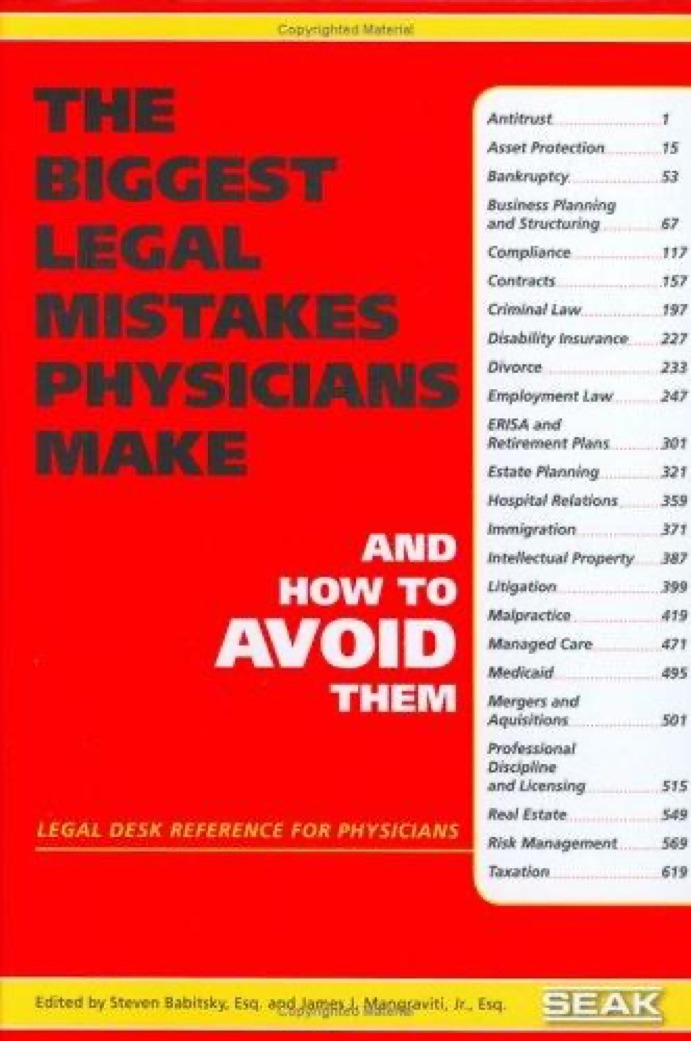
The Biggest Legal Mistakes Physicians Make and How to Avoid Them
Applying the lessons from "The Biggest Legal Mistakes Physicians Make and How to Avoid Them" by Steven Babitsky and James J. Mangraviti Jr. to your life can be a transformative step toward securing your professional legacy and peace of mind. Here are some ways you might integrate these lessons:
-
Adopt a Defensive Mindset in Professional Documentation: - You should treat every patient interaction and chart entry as a potential legal document that might be scrutinized by a jury years in the future. By prioritizing clarity, timeliness, and the clinical rationale behind your decisions, you create a robust shield against malpractice allegations and ensure your professional intent is never misinterpreted.
-
Practice Extreme Ownership of Business Contracts: - Whether you are joining a new practice or launching a healthcare startup, you must meticulously review every line of your legal agreements. You should never assume a "standard" contract is in your best interest; instead, use your understanding of the law to negotiate terms that protect your clinical autonomy and ensure fair exit strategies.
-
Implement Proactive Compliance Systems: - As a leader and entrepreneur, you have the responsibility to build organizations where regulatory compliance is baked into the daily culture. You can integrate regular audits and clear ethical guidelines to prevent administrative errors from escalating into career-ending regulatory battles, reflecting the "Stay Humble" ethos by acknowledging that even the best systems are fallible.
-
Secure Your Personal Financial Fortress: - You need to recognize that your professional success can make you a target for opportunistic litigation. By proactively structuring your assets through legal vehicles like trusts or specialized insurance, you protect your family’s future from the unpredictable nature of medical practice and the volatility of the healthcare business environment.
-
Cultivate a Reputation for Unassailable Integrity: - Your credibility is your most valuable asset, whether you are in the ER, the boardroom, or the cockpit. You should maintain high ethical standards in all public and professional interactions, understanding that your license and reputation are vulnerable to the ripples of even minor legal or administrative oversights.
-
Engage Specialized Expertise Early and Often: - Just as you would consult a specialist for a complex medical case, you should rely on expert legal counsel for professional transitions and disputes. You can avoid the most significant mistakes by recognizing the limits of your own knowledge and leveraging the insights of those who navigate the intersection of medicine and law daily.
By integrating these lessons, you move beyond the "hungry" pursuit of career growth to a "humble" acknowledgement of the risks inherent in a high-stakes profession. Mastering the legal nuances of your field ensures that your focus remains on innovation, leadership, and the lifelong pursuit of excellence without the constant shadow of avoidable litigation.
What the book covers
"The Biggest Legal Mistakes Physicians Make and How to Avoid Them" by Steven Babitsky and James J. Mangraviti Jr. is a comprehensive risk-management guide designed to help medical professionals navigate the complex legal landscape of modern healthcare. This multi-author compilation provides actionable insights into a wide array of legal pitfalls, ranging from medical malpractice and employment contract disputes to regulatory compliance and asset protection. By leveraging the expertise of specialized attorneys and consultants, the book serves as a defensive roadmap for clinicians seeking to safeguard their careers and financial stability.
Summary:
-
Meticulous Documentation and the EHR Trap: - The book emphasizes that clinical excellence is often secondary to the quality of documentation in a courtroom. It outlines how vague charting, retroactive entries, and the misuse of "cut and paste" functions in electronic health records (EHR) serve as primary catalysts for malpractice claims. - Experts argue that the chart is the physician's best witness, urging practitioners to record not just their final actions but also their clinical reasoning and the alternative diagnoses they considered and ruled out.
-
Navigating Complex Employment and Partnership Agreements: - A significant portion of the text is dedicated to the contractual errors physicians make during recruitment or when entering into private practice partnerships. It highlights the dangers of overly restrictive non-compete clauses, poorly defined termination protocols, and the failure to secure adequate "tail" coverage for malpractice insurance. - The authors advise a rigorous due diligence approach, recommending that physicians hire specialized legal counsel to vet every line of a contract rather than relying on verbal assurances or generic industry templates.
-
Regulatory Compliance and Fraud Prevention: - With increased government oversight, the book explores the catastrophic consequences of billing errors, Stark Law violations, and anti-kickback statute infringements. It stresses that administrative ignorance is no defense and can lead to permanent exclusion from federal programs like Medicare. - Chapters provide checklists for implementing internal compliance programs, encouraging a culture where potential errors are identified and corrected before they attract the attention of the Office of Inspector General (OIG).
-
Strategic Asset Protection and Wealth Security: - Beyond clinical liabilities, the text addresses the vulnerability of a physician’s personal wealth to aggressive litigation and creditors. It discusses the strategic use of family limited partnerships, domestic asset protection trusts, and homestead exemptions to create a legal firewall between professional risks and family assets. - Readers are cautioned against "too late" planning, noting that transferring assets after a claim has been initiated can be legally contested as a fraudulent conveyance, thus necessitating proactive financial structuring.
-
Medical Board Investigations and Licensing Hazards: - One of the most overlooked risks discussed is the threat to a physician’s license from non-clinical sources, including social media conduct, disruptive behavior, or substance abuse issues. The book details the specific procedures used by state medical boards and how to defend one’s credentials during an investigation. - It underscores the high stakes of National Practitioner Data Bank reporting, explaining how even minor administrative sanctions can trigger a cascading effect that results in the loss of hospital privileges and insurance panel memberships.
-
The Ethics and Dangers of Expert Witnessing: - For physicians who provide expert testimony, the authors identify the legal hazards of being unprepared, exaggerating credentials, or failing to adhere to the Daubert standard of evidence. It explains how a reputation as a "hired gun" can destroy a physician’s credibility and lead to professional discipline. - Advice focuses on the necessity of a thorough case review and the ethical obligation to provide objective testimony based on sound medical principles rather than the specific outcome desires of the retaining attorney.
Ultimately, this book serves as an essential manual for professional self-defense. It reframes legal knowledge not as an academic burden, but as a critical component of modern medical practice that allows physicians to focus on patient care with the confidence that their professional and personal interests are secure.