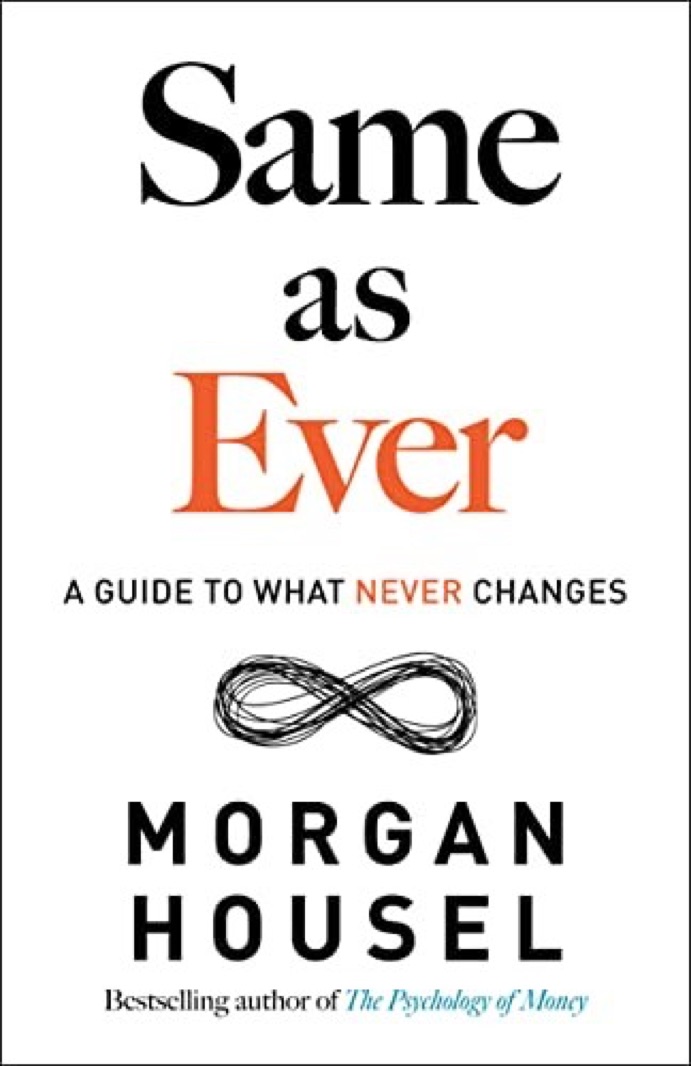
Same as Ever: A Guide to What Never Changes
Applying the lessons from "Same as Ever: A Guide to What Never Changes" by Morgan Housel to your life can be a transformative shift from seeking certainty to building resilience. Here are some ways you might integrate these lessons:
-
Prioritize Behavioral Resilience Over Prediction: - As an emergency physician and serial entrepreneur, you understand that the "plan" often survives only until the first patient arrives or the market shifts. Housel’s work encourages you to stop trying to forecast specific market or clinical disruptions and instead focus on building an organizational temperament that can handle any surprise. - This means investing in your own emotional regulation and ensuring your leadership teams are trained not just in technical skills, but in the ability to maintain composure and pivot when the "unprecedented" happens.
-
Leverage the Margin of Safety in Every Venture: - In both your VC firm, Xcellerant Ventures, and your aviation pursuits, the margin of safety is your best friend. Housel teaches that "slack" is not a sign of laziness but a critical tool for survival; having extra capital or more fuel than the minimum requirement provides the necessary room for error in a world where systems are inherently fragile. - Apply this by intentionally under-optimizing your schedule or your financial structures to ensure that a single bad day or a global market downturn doesn’t lead to catastrophic failure.
-
Master the Art of the Narrative to Lead: - Whether you are writing your next book or leading a boardroom, remember that people are moved by stories, not just data. To inspire change in healthcare or to secure funding for a new startup, you must frame your data within a timeless human narrative that addresses fundamental desires for safety, health, and progress. - Your unique background as an attorney and author allows you to bridge the gap between technical expertise and human emotion; use those storytelling skills to make your complex medical and business insights persuasive to a broader audience.
-
Adopt the "Reasonable" Standard for Sustainability: - Don't beat yourself up for making decisions that aren't perfectly "efficient" if they provide you with peace of mind. In the high-stakes world of telehealth and urgent care, a "reasonable" approach that you can stick with through thick and thin is far superior to a "rational" strategy that forces you to abandon the mission when the pressure becomes unbearable. - Allow yourself and your employees the grace to be human, acknowledging that morale and mental health are just as important to the long-term bottom line as any productivity metric.
-
Maintain Your Mantra to Combat Success-Induced Fragility: - Given your "Stay Hungry, Stay Humble" mantra, Housel’s warning about the fragility of success will resonate deeply. Use his insights to audit your ventures regularly, looking for areas where past wins might have led to an unconscious increase in risk-taking or a decrease in the rigor that first brought you success. - By staying vigilant during the good times, you ensure that your serial entrepreneurship remains a sustainable practice rather than a boom-and-bust cycle, protecting both your professional legacy and your personal well-being.
By integrating these lessons, you can build a life and a career that are not only successful but also robust enough to withstand the inevitable shocks of an unpredictable world. Embracing the constants of human behavior allows you to lead with greater empathy, invest with greater wisdom, and live with the humility required for true lifelong learning.
What the book covers
"Same as Ever: A Guide to What Never Changes" by Morgan Housel is a profound exploration of the unchanging human behaviors that shape history, finance, and individual lives. Housel argues that while the world changes in unpredictable ways, human responses to risk, greed, fear, and opportunity remain remarkably constant. By understanding these timeless patterns, readers can better navigate a volatile future without relying on flawed predictions or complex forecasting models.
Summary:
-
The Inevitability of Surprise and the Limits of Prediction: - Housel asserts that the most impactful historical events are the "tails"—extreme outliers that no one sees coming, such as pandemics, financial collapses, or geopolitical shifts. He argues that rather than trying to predict these black swans, we should cultivate a mindset of permanent preparation, acknowledging that history is essentially a series of "unprecedented" events that occur with surprising regularity. - The core of this argument is that human history is driven by the unexpected, yet our biology is tuned to look for patterns in the recent past. By accepting that we cannot predict the future, we can focus on building resilience against the unknown rather than wasting energy on forecasts that are destined to fail.
-
The Illusion of Progress vs. Behavioral Constants: - While technology, medicine, and engineering advance at a breakneck pace, the underlying drivers of human behavior—envy, greed, fear, and the desire for status—remain exactly the same as they were centuries ago. Housel suggests that by studying these constants, we gain a strategic advantage in understanding the future because the fundamental human hardware does not change. - This perspective shifts the focus from "what is going to change" to "what is going to stay the same," allowing for more stable long-term planning in both business and personal life by anchoring strategies to the bedrock of human nature.
-
The Power of Storytelling over Statistics: - The book posits that the best story usually wins, even if it is not the most accurate or logical one. Humans are narrative-driven creatures, and a compelling story can bridge the gap between cold data and emotional conviction, making it a more powerful force than any spreadsheet. - Housel illustrates how this applies to everything from stock market bubbles to military conflicts, showing that the person who tells the most relatable or comforting story often wields the most power over collective behavior and resource allocation.
-
The "Reasonable" Path vs. the "Rational" Path: - Housel makes a crucial distinction between being strictly rational (acting like a computer) and being reasonable (acting like a social human being). He argues that trying to be 100% rational is often a recipe for failure because it doesn't account for the emotional toll of volatility or the complexity of human relationships. - Being "reasonable" means allowing for a margin of safety and making decisions that help you sleep at night, which is ultimately more effective for long-term endurance than following a theoretically perfect but emotionally grueling plan.
-
The Value of Slack and Strategic Inefficiency: - In a world obsessed with optimization, Housel argues that "slack"—excess cash, extra time, or redundant systems—is often viewed as waste. However, he demonstrates that slack is actually what allows a system to survive the "tails" or the unexpected shocks that destroy hyper-efficient competitors. - By maintaining a margin of safety, individuals and organizations can endure the periods of chaos that are guaranteed to occur, ensuring they are still standing to benefit from the eventual recovery and the power of compounding.
-
The Difficulty of Sustaining Success and the Peril of Expectations: - Success often breeds its own downfall by leading to complacency and the erosion of the very traits that created the success in the first place. Housel notes that when things are going well, people tend to forget that the world is inherently risky, leading them to take on too much leverage or ignore emerging threats. - He further explains that happiness is largely a function of reality minus expectations; thus, keeping expectations low while maintaining high standards for effort is the secret to both professional success and personal contentment.
Ultimately, "Same as Ever" serves as a reminder that the best way to prepare for an uncertain future is to focus on the elements of the human experience that are certain to persist. Housel’s work encourages a shift from the pursuit of technical foresight to the cultivation of behavioral wisdom and structural resilience.