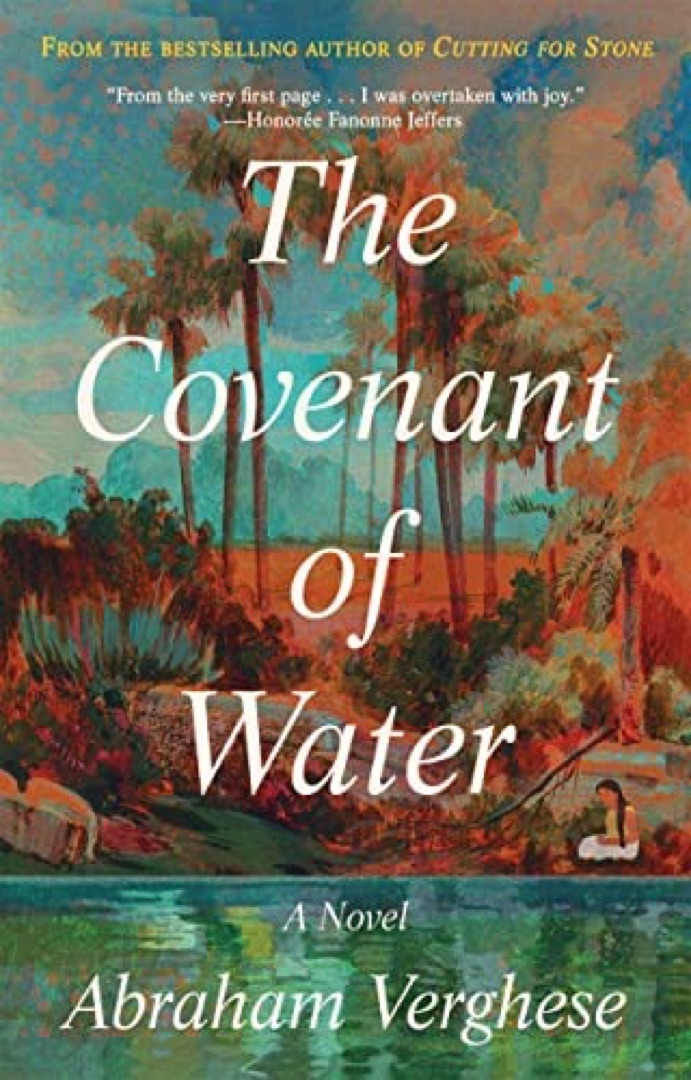
The Covenant of Water
Applying the lessons from "The Covenant of Water" by Abraham Verghese to your life can be a transformative exercise in understanding how history, biology, and character intersect to shape our destinies. Here are some ways you might integrate these lessons:
-
Investigate the Root Cause: - In your professional life, whether in medicine, law, or business, do not simply treat the symptoms of a recurring problem. Like Mariamma’s quest to diagnose "the Condition" as a specific neurological disorder, you must use a multidisciplinary approach to identify the underlying "genetic" flaws in an organization or a patient's case to find a permanent cure.
-
Practice Stewardship and Legacy: - View your leadership roles—whether as a CEO, a lead surgeon, or a pilot—through the lens of Big Ammachi’s stewardship of Parambil. Recognize that you are a temporary guardian of your institutions and that your primary responsibility is to leave them more resilient and better understood for the next generation.
-
Synthesize Art and Science: - Embrace the duality of being a "lifelong learner" by finding the connection between technical precision and human empathy. Just as the novel balances surgical detail with lyrical prose, you should integrate your diverse expertise in law, MBA principles, and clinical practice to create a more holistic and compassionate approach to problem-solving.
-
Maintain Resilience through Transition: - Use the family’s survival through India’s political shifts as a blueprint for navigating market volatility or healthcare reform. Stay hungry for progress but stay humble enough to realize that external forces are often beyond your control; your power lies in how you adapt your "estate" to meet the needs of the new era.
-
Commit to the Marginalized: - Follow Digby’s example by applying your high-level skills to serve those whom society often ignores, such as the patients in a leprosarium or those in underserved tribal health systems. True leadership is defined by the quality of care and attention you provide to those who can offer you nothing in return.
-
Honor the Power of Narrative: - Understand that every patient, client, and family member has a story that precedes their current situation. By listening to the "covenant" of their past, you gain the context necessary to make better legal, medical, and personal decisions in the present.
By integrating these lessons, you can cultivate a life that honors the complexity of the human condition while relentlessly pursuing the scientific and social advancements that improve it. Like the characters in Verghese’s epic, you will find that the greatest successes come from a deep commitment to truth, a respect for tradition, and an unwavering dedication to the people you serve.
What the book covers
"The Covenant of Water" by Abraham Verghese is a sprawling, multi-generational epic set against the lush backdrops of Kerala, India, spanning the years 1900 to 1977. The novel follows a family that suffers from a peculiar medical affliction known as "the Condition," where at least one member in every generation dies by drowning. Through the eyes of its matriarch, Big Ammachi, and her descendants, the book explores the intersections of faith, the evolution of modern medicine, and the unbreakable bonds of kinship. It is a profound meditation on the secrets we keep and the legacies we leave behind in a land defined by its waterways.
Summary:
-
The Matriarch’s Journey: - The story begins in 1900 with a twelve-year-old girl sent from her home to marry a forty-year-old widower at an estate called Parambil. As she matures into the beloved "Big Ammachi," she becomes the spiritual and operational anchor of the family, navigating the complexities of her new home while discovering the dark history of the men in her husband's lineage who fear the very water that sustains their land.
-
The Mystery of the Condition: - Central to the narrative is "the Condition," a hereditary anomaly that makes members of the family susceptible to drowning even in shallow water. This mystery serves as both a literal biological threat and a metaphorical burden, driving the family to seek answers through both spiritual rituals and, eventually, rigorous scientific inquiry as the world around them begins to modernize.
-
Digby Kilgour’s Parallel Path: - The novel introduces Digby Kilgour, a young Scottish surgeon who travels to India to escape a difficult past and practice medicine in the British Raj. His journey from a talented surgical resident in Madras to a dedicated doctor at a leprosarium provides a technical and compassionate look at the medical challenges of the era, eventually intersecting with the family at Parambil in a way that alters their collective destiny.
-
The Evolution of Parambil: - As the decades pass, Parambil transforms from a remote estate into a hub of activity and relative prosperity. Big Ammachi’s son, Philipose, grows up to become a writer, capturing the changing social fabric of India, while his marriage to the talented artist Elsie introduces new layers of creative passion and tragic complexity to the family’s history.
-
The Pursuit of Medical Knowledge: - The narrative shifts focus to Mariamma, the granddaughter of Big Ammachi, who enters the field of medicine during a time of great social and political upheaval in India. Driven by the tragedies that have claimed her relatives, she dedicates her life to uncovering the neurological basis of "the Condition," representing the bridge between ancient tradition and modern clinical practice.
-
Social and Political Upheaval: - The story is meticulously placed within the context of India’s fight for independence, the rise of the Naxalite movement, and the shifting class dynamics of the 20th century. These external forces test the family's resilience, forcing them to adapt their leadership at Parambil and their roles within a society that is rapidly discarding colonial influences in favor of a new national identity.
-
The Convergence of Secrets: - In the final act, the disparate threads of the story—Digby’s medical legacy, Elsie’s hidden art, and Mariamma’s clinical research—converge to reveal the true nature of "the Condition." This revelation provides a sense of closure to the generational trauma, proving that while water can take life, the "covenant" of family and medical truth can offer a path toward healing and redemption.
This masterpiece highlights the intersection of human frailty and medical progress, suggesting that our understanding of the past is the only way to safeguard the future. Verghese uses his expertise as a physician to craft a narrative that is as scientifically precise as it is emotionally resonant.