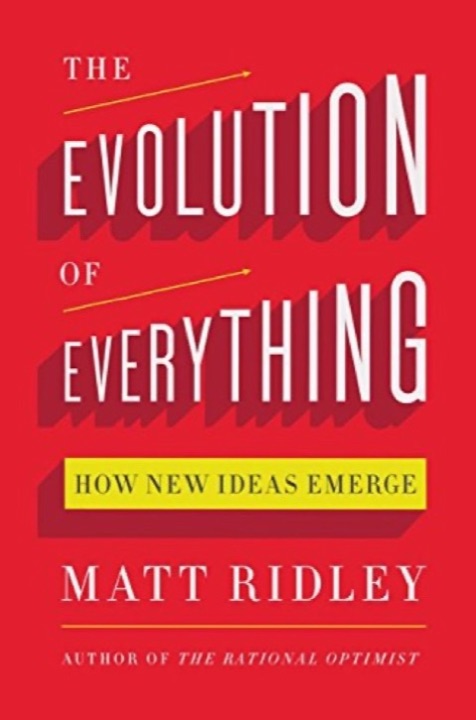
The Evolution of Everything: How New Ideas Emerge
Applying the lessons from "The Evolution of Everything: How New Ideas Emerge" by Matt Ridley to your life can be both insightful and transformative, given your rich experiences and personal philosophy. Here are some ways you might integrate these lessons:
-
Embrace Decentralization and Collaboration: - Given your belief in kindness and empathy, you can further embrace decentralized collaboration in your personal and professional life. Encourage open dialogue and the sharing of ideas with colleagues, friends, and family, recognizing that innovation often arises from collective efforts rather than individual genius.
-
Adaptation and Change: - Your life experiences, including surviving plane crashes and your approach to personal growth, align well with the idea of adaptation. Continue to embrace change as a constant and view challenges as opportunities for growth and learning.
-
Skepticism of Top-Down Solutions: - Your skepticism of organized religion and certain political ideologies reflects a natural alignment with Ridley's critique of central planning. Continue to question and critically evaluate systems and solutions that rely heavily on top-down control, advocating for more organic and adaptive approaches.
-
Foster Emergent Order: - In your daily routine and interactions, allow for spontaneity and the natural emergence of order. This could mean being open to new experiences, like your aspiration to skydive, or allowing your hobbies and interests to evolve naturally over time.
-
Innovation as a Cumulative Process: - Recognize that your achievements, especially in your career and personal life, are built on past experiences and knowledge. Continue to build on these foundations, encouraging others to do the same by sharing your insights and experiences.
-
Cultural and Technological Interconnectedness: - Leverage your forward-thinking approach to technology and your passion for social issues to foster interconnectedness. Engage in discussions and activities that promote cultural exchange and technological advancement for societal betterment.
-
Resilience and Persistence: - Your resilience and persistence are key strengths that align with the evolutionary process. Continue to apply these traits in overcoming challenges and pursuing your goals, such as living in the moment and achieving personal growth.
-
Encourage a Rich Environment for Knowledge Exchange: - Create environments, whether at work or in your personal life, that encourage the free exchange of ideas and knowledge. This could involve mentoring others, participating in community activities, or simply being open to learning from those around you.
By integrating these lessons into your life, you can continue to evolve and adapt, fostering innovation and growth in both yourself and those around you.
What the book covers
"The Evolution of Everything: How New Ideas Emerge" by Matt Ridley explores the concept that evolution is not limited to the biological realm but is a universal process that applies to culture, technology, economics, and more. Ridley argues that many aspects of human life develop through a bottom-up process rather than being directed by top-down control. Here’s a thorough summary of the book, along with key takeaways and lessons:
Summary:
-
Introduction to Evolutionary Thinking: - Ridley begins by challenging the traditional view that progress is driven by top-down planning and control. Instead, he posits that evolution, a process of gradual, incremental change driven by competition and adaptation, is a more accurate model for understanding how new ideas and innovations emerge.
-
Evolution Beyond Biology: - The book extends the concept of evolution beyond biology to encompass various domains such as culture, technology, language, morality, and even religion. Ridley illustrates how these areas evolve through a process of trial and error, where successful adaptations are retained and unsuccessful ones are discarded.
-
The Role of Innovation: - Innovation is portrayed as a decentralized process that often occurs without a central plan. Ridley emphasizes that many significant inventions and ideas arise from collaborative efforts and the sharing of knowledge, rather than from individual genius or government intervention.
-
Economic Evolution: - Ridley applies evolutionary theory to economics, arguing that markets evolve through the interactions of countless individuals making decisions based on their own interests. He suggests that economic systems function best when they are allowed to evolve naturally, without excessive regulation or control.
-
Cultural and Social Evolution: - The book discusses how cultural norms and social structures evolve over time. Ridley highlights the importance of cultural exchange and the blending of ideas from different societies as drivers of social evolution.
-
The Evolution of Technology: - Ridley explores the history of technological advancements, showing how they often result from the cumulative efforts of many people rather than the vision of a single inventor. He argues that technological progress is an emergent property of human collaboration and competition.
-
The Myth of Central Planning: - A recurring theme in the book is the critique of central planning and the belief that complex systems can be effectively managed from the top down. Ridley argues that such attempts often fail because they cannot match the adaptive efficiency of evolutionary processes.
-
Case Studies and Examples: - Throughout the book, Ridley provides numerous examples and case studies to illustrate his points, ranging from the development of the internet to the evolution of language and the spread of religious ideas.
Key Takeaways and Lessons:
-
Decentralization is Key: Many successful systems and innovations emerge from decentralized processes where individuals and small groups experiment and adapt.
-
Embrace Change and Adaptation: Change is a constant in all systems, and the ability to adapt is crucial for survival and success.
-
Collaboration Over Control: Collaboration and the free exchange of ideas often lead to more significant advancements than centralized control and planning.
-
The Power of Emergent Order: Complex systems often organize themselves in ways that are more efficient and effective than any designed system could achieve.
-
Skepticism of Top-Down Solutions: Be wary of solutions that rely on central planning or control, as they may stifle the natural evolutionary processes that drive progress.
-
Innovation is Cumulative: Most innovations build on previous ideas and technologies, highlighting the importance of a rich and open environment for knowledge exchange.
-
Cultural and Technological Interconnectedness: The evolution of culture and technology is deeply interconnected, with each influencing and driving the other forward.
Ridley's book encourages readers to view the world through the lens of evolution, recognizing the power of decentralized, adaptive processes in shaping the world around us.