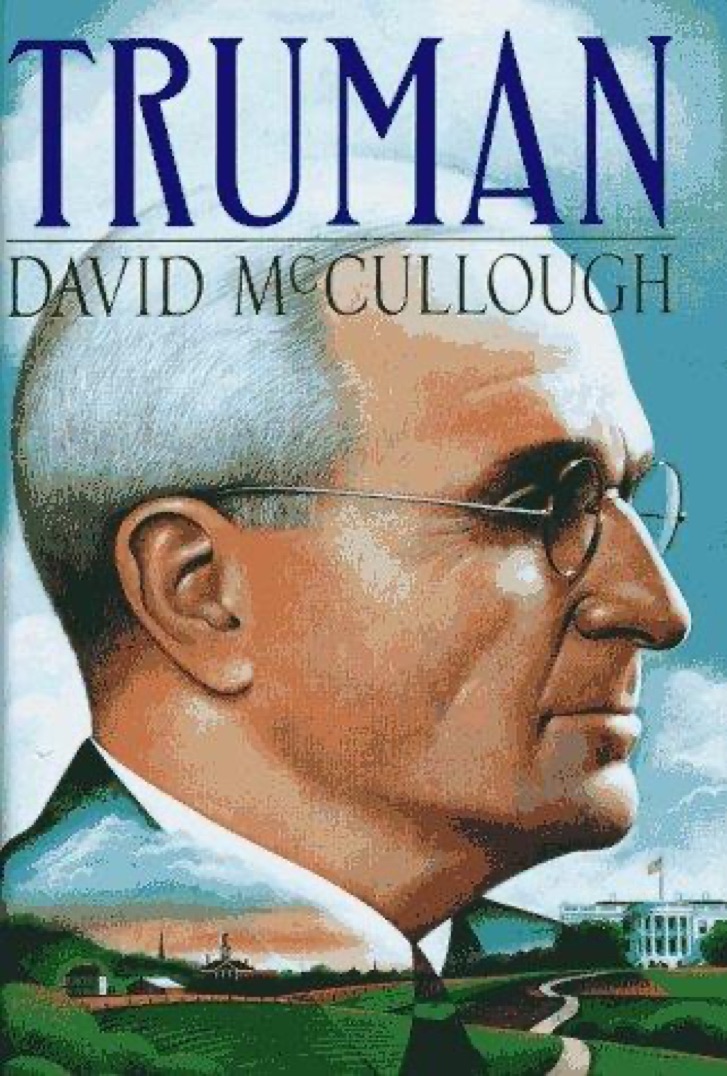
Truman
Applying the lessons from "Truman" by David McCullough to your life can be a powerful catalyst for developing the grit and decisiveness necessary for high-stakes leadership. Here are some ways you might integrate these lessons:
- Own the Consequences of Your Decisions: - In your roles as a physician or entrepreneur, you must embrace the "The Buck Stops Here" mentality. Truman understood that while advisors are vital, the ultimate responsibility for a choice—whether it's a clinical diagnosis or a venture capital investment—rests solely with the leader, and you must have the courage to live with those outcomes without passing blame.
- Cultivate a Reputation for Integrity: - Navigating the "Pendergast machines" of the modern world, whether in complex legal battles or corporate healthcare, requires an unshakeable moral compass. Like Truman, you should demonstrate that one can work within imperfect systems while maintaining a personal code of ethics that earns the long-term trust of colleagues and the public.
- Commit to Lifelong Learning and Preparation: - Truman was an avid reader and student of history, which allowed him to bridge the gap when he was thrust into the presidency. You can mirror this by continuously expanding your knowledge base beyond your primary fields of medicine and law, ensuring you are prepared for the "unexpected vice-presidency" moments in your own career.
- Lead with Commonality and Humility: - Despite his immense power, Truman never lost his connection to his roots or his sense of being a "common man." By staying humble and approachable, you can foster a culture in your organizations where every team member feels valued, which is essential for the high-pressure environments of emergency departments and startup incubators.
- Exercise Decisive Action Over General Popularity: - Truman’s decision to fire MacArthur or push through civil rights reforms was often unpopular in the short term but correct in the long term. You must be willing to make the "hard right" decision rather than the "easy wrong," prioritizing the long-term health of your patients, businesses, or legal clients over immediate social approval.
- Persist Through Apparent Failure: - From a failed haberdashery to a seemingly impossible 1948 election, Truman proved that resilience is a prerequisite for greatness. When a healthcare startup faces a pivot or a pilot’s training becomes grueling, remember that Truman’s setbacks were merely the foundation for his eventual success on the world stage.
By integrating these lessons, you can emulate a leadership style that is rooted in character, reinforced by knowledge, and defined by the courage to act in the face of uncertainty. Truman’s life proves that "staying hungry and staying humble" isn't just a mantra, but a blueprint for a life of profound consequence and service.
What the book covers
"Truman" by David McCullough is a Pulitzer Prize-winning biography that masterfully chronicles the life of the thirty-third President of the United States. Spanning from his modest upbringing in Independence, Missouri, to the global stage of the mid-20th century, the book provides an intimate portrait of a man often dismissed as ordinary who rose to meet extraordinary challenges. McCullough meticulously researches Truman’s character, his political rise through the Pendergast machine, and the weight of the monumental decisions he faced during his presidency.
Summary:
- Missouri Origins and Early Struggles: - Harry Truman grew up in a farm-focused Missouri environment, developing a strong work ethic and a love for reading. His early life was marked by several failed business ventures, including a lead mine and a haberdashery, which shaped his perspective on financial hardship and the resilience required to bounce back from defeat.
- The Crucible of World War I: - Truman’s service as a battery commander in France during World War I was a transformative period where he discovered his capacity for leadership. He successfully led a rowdy group of soldiers, earning their respect through fairness and bravery, a trait that would define his future political career and his ability to command under pressure.
- Rise Through the Pendergast Machine: - Upon returning to Missouri, Truman entered politics with the backing of the powerful and often corrupt Pendergast political machine. Despite these associations, Truman maintained a personal reputation for absolute integrity, working as a county judge to improve infrastructure and later winning a seat in the U.S. Senate where he led the "Truman Committee" to root out wartime waste.
- The Unexpected Vice Presidency and Presidency: - After being chosen as Franklin D. Roosevelt's running mate in 1944 for his clean record, Truman served only 82 days as Vice President before FDR’s death thrust him into the presidency. He was initially kept in the dark regarding the Manhattan Project and major diplomatic strategies, requiring him to undergo a rapid and intense period of self-education to lead a nation at war.
- Ending the War and the Atomic Decision: - Truman faced one of the most significant moral dilemmas in human history: the decision to use atomic weapons against Japan. McCullough details the internal debates and Truman’s eventual conviction that the bombings of Hiroshima and Nagasaki were necessary to end the war quickly and save countless American lives, establishing his "The Buck Stops Here" philosophy.
- Architect of the Post-War World: - In the aftermath of World War II, Truman oversaw the implementation of the Marshall Plan to rebuild Europe and the creation of the Truman Doctrine to contain Soviet expansion. His administration’s commitment to international cooperation led to the formation of NATO and the recognition of the State of Israel, fundamentally reshaping 20th-century geopolitics.
- The 1948 Election and the Korean War: - Defying all polling and media predictions, Truman won a stunning re-election in 1948 after a grueling "Whistle Stop" campaign across the country. However, his second term was soon dominated by the outbreak of the Korean War and his controversial decision to fire General Douglas MacArthur to maintain civilian control over the military, a move that was deeply unpopular at the time but later praised for its constitutional adherence.
- Retirement and Legacy of Integrity: - Truman left office with low approval ratings but returned to Missouri as a private citizen, refusing to monetize his former office. McCullough highlights how his reputation grew over time, as historians and the public came to appreciate his honesty, his decisive nature, and his commitment to serving the people rather than his own interests.
The significance of McCullough’s "Truman" lies in its humanization of a leader who stood at the center of the modern age’s most pivotal moments. It serves as a definitive testament to the idea that a person of character and common sense can navigate complex global crises and leave a lasting impact on democracy and international stability.