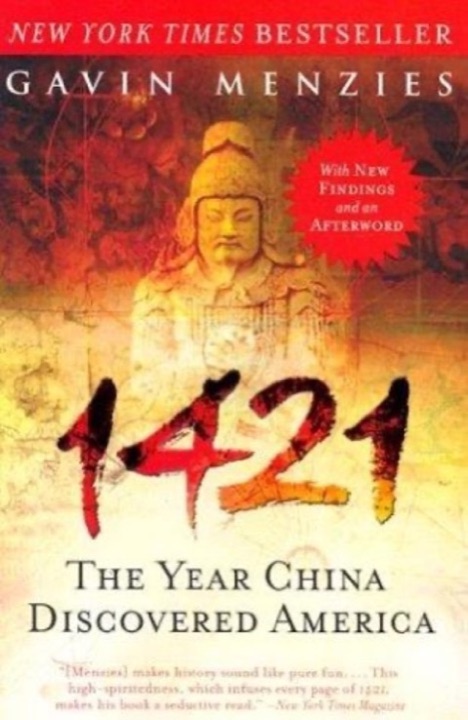
1421
Applying the lessons from "1421: The Year China Discovered the World" by Gavin Menzies to your life can be an enriching exercise, especially given your diverse experiences and interests. Here are a few ways you might integrate the book's themes into your personal journey:
-
Re-evaluation of History and Perspectives: Just as the book encourages questioning established historical narratives, you can apply this mindset to your own life. Reflect on your past experiences and beliefs, and consider how they have shaped your current worldview. This approach aligns with your philosophy of being a lifelong learner and constantly evolving.
-
Embrace Global Interconnectedness: The book highlights the interconnectedness of different cultures long before the European Age of Exploration. You can draw parallels to your own life by fostering connections with people from diverse backgrounds, whether through travel, reading, or engaging in cultural exchanges. This aligns with your passion for equality and acceptance.
-
Critical Analysis and Open-mindedness: The controversy surrounding Menzies' claims serves as a reminder of the importance of critical thinking. Apply this lesson by maintaining an open mind and critically analyzing new information, whether in your professional life as a physician or in personal interactions. This approach complements your direct and analytical communication style.
-
Appreciate Non-European Contributions: The book emphasizes the contributions of non-European civilizations to global history. Similarly, you can appreciate and acknowledge the diverse influences that have shaped your life and career. This perspective aligns with your advocacy for social issues and your belief in the shared humanity of all people.
-
Persistence and Resilience: The ambitious voyages described in the book reflect a spirit of persistence and resilience. You can draw inspiration from this by continuing to pursue your goals and dreams, such as skydiving or living in the moment. Your superpower of persistence and your motto of "Never, ever quit" resonate with this theme.
-
Challenge Established Norms: Just as Menzies challenges conventional historical narratives, you can challenge established norms in your own life. Whether it's in your professional field, personal beliefs, or social activism, continue to question and push boundaries to create positive change.
By integrating these lessons into your life, you can continue to grow and evolve while staying true to your core values of kindness, empathy, and resilience.
What the book covers
"1421: The Year China Discovered the World" by Gavin Menzies presents a controversial thesis that Chinese explorers, led by Admiral Zheng He, discovered America and other parts of the world before European explorers like Columbus and Magellan. Menzies argues that between 1421 and 1423, the Chinese fleet circumnavigated the globe, mapping and establishing colonies in the Americas, Australia, and even Antarctica.
Summary:
-
The Chinese Fleet: Menzies details the grandeur of the Ming Dynasty's naval fleet, which was composed of massive ships, far larger than any European vessels of the time. These ships were part of a series of voyages initiated by Emperor Zhu Di to expand China's influence and establish trade routes.
-
Zheng He's Voyages: The book focuses on the voyages led by Admiral Zheng He, a eunuch and trusted advisor to the emperor. Menzies suggests that these voyages reached far beyond the Indian Ocean, extending to the Americas, Australia, and possibly even Antarctica.
-
Evidence and Claims: Menzies presents various pieces of evidence to support his claims, including maps, artifacts, and accounts from different cultures that he interprets as proof of Chinese presence. He also discusses the influence of Chinese cartography on later European maps.
-
Impact on World History: The book argues that these voyages had a significant impact on world history, influencing trade, culture, and the eventual European Age of Exploration. Menzies suggests that knowledge from these Chinese voyages was passed on to European explorers, aiding their navigation and discoveries.
-
Controversy and Criticism: Menzies' thesis has been met with skepticism and criticism from historians and scholars. Critics argue that his evidence is circumstantial and that his interpretations are speculative. Despite this, the book has sparked interest and debate about the extent of Chinese exploration.
Key Takeaways and Lessons:
-
Re-evaluation of History: "1421" encourages readers to question and re-evaluate established historical narratives, highlighting the importance of considering multiple perspectives in understanding history.
-
Global Interconnectedness: The book underscores the idea that global exploration and cultural exchanges were occurring long before the European Age of Exploration, suggesting a more interconnected world history.
-
Critical Analysis: The controversy surrounding Menzies' claims serves as a reminder of the importance of critical analysis and evidence-based conclusions in historical research.
-
Cultural Contributions: It highlights the significant contributions of non-European civilizations to global history, urging a more inclusive view of historical achievements.
While "1421" presents an intriguing narrative, it is essential to approach its claims with a critical eye and consider the broader scholarly consensus on the history of exploration.