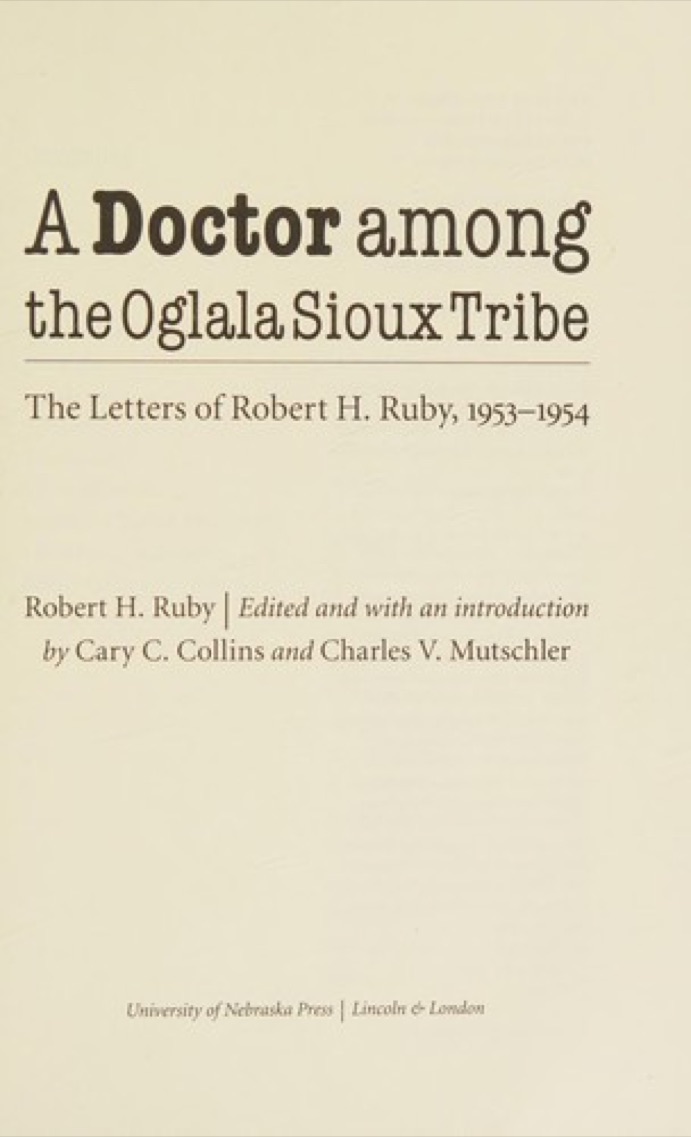
A Doctor among the Oglala Sioux Tribe: The Letters of Robert H. Ruby, 1953–1954
Applying the lessons from "A Doctor among the Oglala Sioux Tribe: The Letters of Robert H. Ruby, 1953–1954" by Robert H. Ruby, Cary C. Collins, and Charles V. Mutschler to your life can be a profound exercise in understanding the intersection of systemic leadership and individual human impact. Here are some ways you might integrate these lessons:
-
Lead with Cultural Humility: - In your ventures like Tribal Health or global medical initiatives, you must recognize that your clinical expertise is only half the battle. You should approach every new community as a student first, seeking to understand their traditions and internal hierarchies before attempting to implement top-down systemic changes.
-
Navigate Bureaucracy with Persistence: - As an entrepreneur and attorney, you know that "the system" is often the greatest barrier to innovation. Use Ruby’s frustrations as a catalyst to identify where red tape stifles care in your own businesses, and leverage your legal and MBA background to create streamlined alternatives that bypass institutional inertia.
-
Practice Resilience in Resource-Limited Settings: - Whether you are in the ER or in a cockpit, things will go wrong and resources will be scarce. You can apply Ruby's "make-do" mentality by honing your ability to stabilize high-stakes situations with the tools at hand, emphasizing that a leader's grit is often more valuable than a perfectly stocked supply room.
-
Document Your Journey for Clarity: - Just as Ruby used his letters to process his experiences, you should maintain a rigorous practice of reflection and writing. This not only preserves the history of your entrepreneurial ventures but also provides the mental distance needed to evaluate your decisions objectively during times of high stress.
-
Identify the Root Cause of Systemic Failure: - Use your VC lens to look past the surface-level symptoms of a problem. Ruby saw that disease was linked to policy; in your work, you should continue to investigate how legal, economic, and social structures create the "pain points" that your next healthcare startup can solve.
-
Stay Hungry for Connection, Stay Humble in Service: - Remind yourself that every patient or client has a story that transcends their immediate need. By maintaining the "Stay Hungry, Stay Humble" mantra, you ensure that your leadership remains focused on the individual human beings behind the data points and medical records.
By integrating these lessons, you can bridge the gap between high-level healthcare strategy and the essential, ground-level work of serving marginalized populations with dignity and excellence.
What the book covers
"A Doctor among the Oglala Sioux Tribe: The Letters of Robert H. Ruby, 1953–1954" by Robert H. Ruby, Cary C. Collins, and Charles V. Mutschler is an evocative collection of primary source documents that chronicles the experiences of a young physician stationed at the Pine Ridge Indian Reservation. Through a series of candid letters written to his family, Dr. Ruby provides a raw, first-person account of the medical, social, and bureaucratic challenges inherent in the Indian Health Service during the mid-20th century. The book serves as both a personal memoir of professional growth and a historical record of the Oglala Lakota people during a period of significant transition in federal Indian policy.
Summary:
-
The Reality of Reservation Medicine: - Upon his arrival at Pine Ridge, Dr. Ruby is immediately confronted with the stark contrast between his medical training and the reality of a resource-strapped government facility. He describes a healthcare system struggling with crumbling infrastructure, chronic shortages of basic medical supplies, and an overwhelming patient load that forces him to become a generalist in the truest sense, handling everything from emergency trauma to infectious disease outbreaks.
-
Bureaucratic Obstacles and the BIA: - A recurring theme in Ruby’s letters is his frustration with the Bureau of Indian Affairs (BIA). He documents the stifling effects of government red tape, which often delayed necessary medical interventions and hindered the implementation of modern health standards. This section of the book highlights the disconnect between Washington-based policy and the boots-on-the-ground reality of providing care in isolated, impoverished communities.
-
Clash of Medical Philosophies: - Ruby details his encounters with traditional Lakota medicine men and the "yuwipi" healing ceremonies. Initially skeptical and dismissive, his letters reflect a slow evolution as he begins to recognize the deep spiritual and psychological importance of these traditions. He navigates the delicate balance of asserting Western clinical practices while attempting to maintain the trust of a population that viewed government doctors with well-earned suspicion.
-
Public Health and Socioeconomic Despair: - The letters provide a grim look at the health disparities of the 1950s, particularly the prevalence of tuberculosis, malnutrition, and high infant mortality rates. Ruby identifies these not just as medical failures, but as symptoms of systemic poverty and the failure of federal relocation and termination policies that were stripping the tribe of its social cohesion.
-
The Human Element of the Oglala Lakota: - Beyond the clinical observations, Ruby offers intimate portraits of the individuals he treats and works alongside. He moves past the stereotypes of the era to describe the resilience, humor, and dignity of the Oglala people. These personal connections eventually soften his outsider perspective, leading to a deeper sense of advocacy for his patients' rights and welfare.
-
The Doctor’s Personal Transformation: - The correspondence tracks Ruby's internal journey from a reluctant recruit fulfilling a service obligation to a more culturally competent and empathetic practitioner. He reflects on his own biases and the limitations of his MBA-like focus on efficiency when faced with the complex cultural tapestry of the Sioux, ultimately finding a sense of purpose in the hardship of his assignment.
This collection is a vital contribution to medical history and Native American studies, offering a rare, unvarnished window into the systemic failures and individual triumphs that defined reservation life in the mid-century. It serves as a reminder of the enduring power of empathy and the necessity of cultural humility in the practice of medicine.