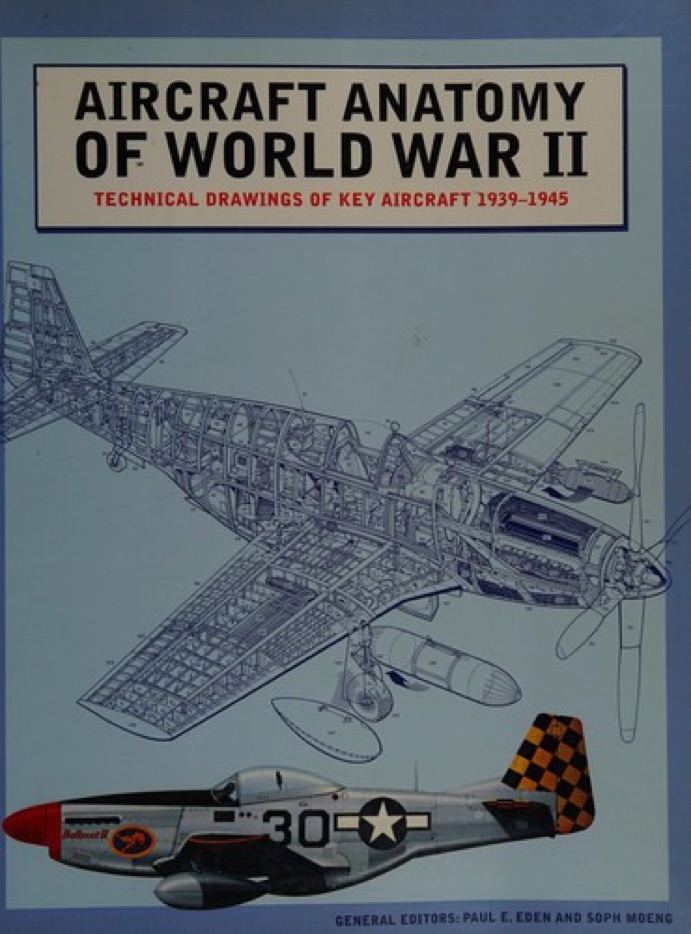
Aircraft Anatomy of World War II: Technical Drawings of Key Aircraft 1939–1945
Applying the lessons from "Aircraft Anatomy of World War II: Technical Drawings of Key Aircraft 1939–1945" by Paul E. Eden and Soph Moeng to your life can be a transformative exercise in understanding how complexity, precision, and rapid iteration drive success in high-stakes environments. Here are some ways you might integrate these lessons:
- Master the Technical Blueprints of Your Field: - Just as an aviator must understand the internal systems of their craft to survive a mechanical failure, you should strive for a "cutaway" understanding of your own professional systems. Whether in medicine, law, or business, true leadership requires more than a surface-level view; you must know how every component of your organization or practice connects and functions under pressure to ensure reliability and safety.
- Embrace Iterative Innovation Under Pressure: - The rapid advancement from the biplanes of 1939 to the jets of 1945 demonstrates that crisis can be a catalyst for unparalleled growth. You can apply this by viewing challenges as design constraints that force more creative, efficient solutions, allowing you to pivot your ventures or clinical practices with the same agility as a wartime engineering team.
- Build Redundancy into Critical Systems: - The technical drawings highlight the importance of redundant controls and armored protection for vital components. In your own life and business ventures, you should identify your single points of failure—whether they are financial, operational, or health-related—and implement "fail-safe" mechanisms that allow you to maintain mission-critical functions even when one system takes a hit.
- Optimize the Human-System Interface: - The evolution of the cockpit reminds you that even the most powerful technology is useless if the human operator is overwhelmed. You should focus on simplifying your workflows and reducing cognitive load for your team, ensuring that your leadership style and organizational tools enhance performance rather than creating friction during high-stakes decision-making.
- Manage the Balance of Performance and Payload: - Every aircraft design is a series of trade-offs between speed, range, and firepower. You must recognize that you cannot maximize every variable in your personal or professional life simultaneously; success comes from the strategic balancing of your resources, ensuring you have enough "fuel" for the long haul while carrying the "payload" necessary to achieve your primary objectives.
By integrating these lessons, you develop a mindset that values deep technical competency, systemic resilience, and the relentless pursuit of improvement. Much like the legendary aircraft of the Second World War, a well-engineered life requires constant maintenance, a clear understanding of your internal mechanics, and the courage to fly into the unknown with a machine you have built to last.
What the book covers
"Aircraft Anatomy of World War II: Technical Drawings of Key Aircraft 1939–1945" by Paul E. Eden and Soph Moeng is a meticulous visual exploration of the mechanical and structural foundations of the era's most significant warplanes. Through a series of detailed cutaway illustrations and expert technical analysis, the book provides a transparent look at the engineering feats that powered the Allied and Axis air forces during the height of the conflict. It acts as an essential reference for understanding the intersection of aerodynamics, armament, and industrial design during the most intensive period of aviation development in human history.
Summary:
- The Structural Architecture of Combat: - The book details the transition from wood and fabric biplanes to the all-metal monocoque designs that dominated the skies. It explains how engineers utilized materials like duralumin and stressed-skin construction to create airframes capable of withstanding the G-forces of high-speed dogfights and the heavy vibrations of high-caliber weaponry.
- Propulsion and Powerplant Evolution: - A significant portion of the text is dedicated to the internal mechanics of legendary engines such as the Rolls-Royce Merlin and the Pratt & Whitney Double Wasp. It explores the technical challenges of cooling, turbo-supercharging for high-altitude performance, and the sheer mechanical complexity required to generate thousands of horsepower in a compact, reliable package.
- Armament and Offensive Integration: - The drawings reveal the complex integration of offensive systems, from the synchronized machine guns of fighters to the massive internal bomb bays of heavy bombers like the B-17 Flying Fortress. The analysis covers the engineering behind turret mechanisms, ammunition feed systems, and the structural reinforcement needed to carry heavy payloads over long distances.
- Operational Specificity and Specialized Design: - The authors highlight how specific mission requirements dictated radical design choices, such as the folding wings and arrester gear of the F6F Hellcat for carrier operations. It also examines the "Wooden Wonder," the de Havilland Mosquito, showing how non-strategic materials were used to create one of the fastest and most versatile aircraft of the entire war.
- Cockpit Ergonomics and the Pilot Interface: - Detailed views of the instrumentation and flight controls illustrate the high cognitive load placed on World War II pilots. The book examines how engineers attempted to standardize layouts and improve visibility, armor protection, and escape systems, marking the early beginnings of modern human factors engineering in high-stress environments.
- The Technological Leap into the Jet Age: - The concluding sections examine the revolutionary designs of late-war aircraft like the Messerschmitt Me 262 and the Gloster Meteor. These profiles illustrate the fundamental shift in airframe design required to accommodate jet propulsion, including swept wings and the relocation of fuel systems to handle the increased consumption of early turbine engines.
This volume serves as a powerful reminder that the outcome of World War II was determined as much in the design bureaus and factories as it was in the air. By stripping away the exterior skin of these machines, the book honors the ingenuity of the designers who pushed the boundaries of physics and materials science under the most extreme pressure. It remains a foundational text for anyone interested in the technical heritage of modern aviation and the relentless pace of wartime innovation.