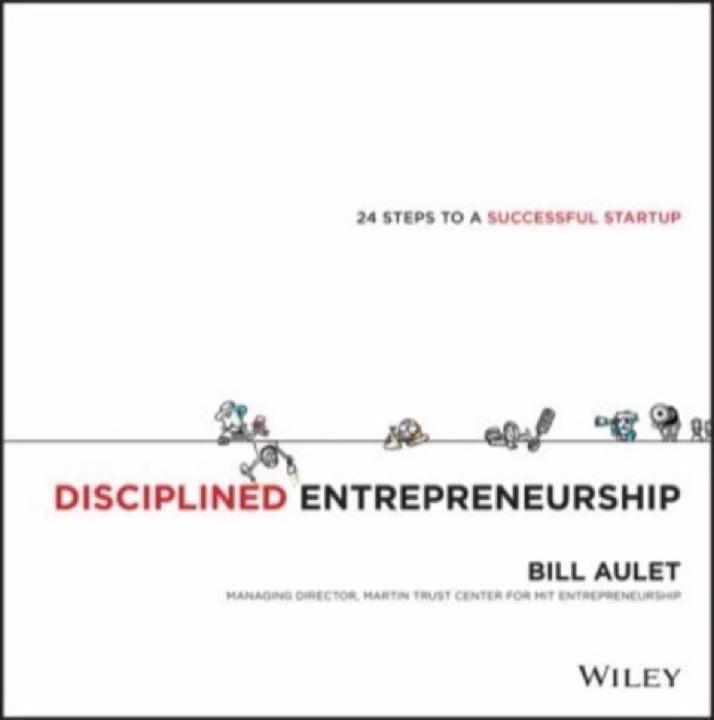
Disciplined Entrepreneurship: 24 Steps to a Successful Startup
Applying the lessons from "Disciplined Entrepreneurship" by Bill Aulet to your life can be a transformative process, even if you're not directly involved in starting a business. Here are some ways you might integrate these principles into your personal and professional life:
-
Structured Approach to Goals: Just as Aulet emphasizes a structured approach to entrepreneurship, you can apply this to your personal goals. Break down your aspirations, such as living in the moment or trying skydiving, into manageable steps. Create a plan with specific actions and timelines to achieve these goals.
-
Customer Focus and Empathy: Your core values of kindness and empathy align well with understanding others deeply, as Aulet suggests for customers. Apply this by continuing to engage with people around you, understanding their needs and perspectives, and fostering meaningful relationships.
-
Iterative Learning: Embrace the idea of constant learning and iteration in your personal growth. Reflect on your experiences, both successes and failures, and use them to refine your approach to life. This aligns with your mindset of being in a constant state of beta and aspiring to be a lifelong learner.
-
Value Proposition in Relationships: Just as a startup needs a clear value proposition, consider what value you bring to your relationships and how you can enhance it. This could involve being more present, offering support, or sharing your humor and resilience with others.
-
Scalability in Personal Growth: Think about how you can scale your personal growth. This might involve setting larger goals that build on your current achievements, like expanding your advocacy work or exploring new hobbies that challenge you.
-
Team and Culture: Apply the importance of building the right team and culture to your family and social circles. Foster an environment where kindness, loyalty, and open communication are prioritized, ensuring that your relationships are supportive and aligned with your values.
-
Financial Metrics and Life Decisions: While financial metrics are crucial for startups, you can apply similar analytical rigor to your life decisions. Consider the long-term impact of your choices, whether they relate to health, relationships, or career, and ensure they align with your values and goals.
-
Persistence and Adaptability: Your superpower of persistence is a key entrepreneurial trait. Continue to apply this in overcoming challenges and adapting to new situations, whether in your personal life or professional endeavors.
-
Social Impact and Advocacy: Your passion for social issues can be furthered by applying Aulet's principles to your advocacy work. Identify specific areas where you can make a difference, develop a plan, and execute it with the same discipline as an entrepreneur.
By integrating these principles into your life, you can enhance your personal growth, relationships, and impact on the world, all while staying true to your values and aspirations.
What the book covers
"Disciplined Entrepreneurship: 24 Steps to a Successful Startup" by Bill Aulet is a comprehensive guide that breaks down the complex process of starting a company into manageable steps. Aulet, a senior lecturer at the MIT Sloan School of Management, draws on his extensive experience in entrepreneurship to provide a structured approach to building a successful startup. Here’s a thorough summary of the book, along with key takeaways and lessons:
Overview
The book is structured around 24 steps, which are grouped into six themes. These steps guide entrepreneurs from the initial idea stage to launching a product and scaling the business. Aulet emphasizes that entrepreneurship is not just an art but a discipline that can be learned and practiced.
The 24 Steps
1. Market Segmentation
- Step 1: Brainstorm and identify potential markets.
- Step 2: Narrow down to a beachhead market.
- Step 3: Develop end-user profiles.
- Step 4: Calculate the Total Addressable Market (TAM) for the beachhead market.
2. Select a Beachhead Market
- Step 5: Profile the persona of the ideal customer.
- Step 6: Determine the full life cycle use case.
- Step 7: Define the high-level product specification.
- Step 8: Quantify the value proposition.
3. Build a Product Plan
- Step 9: Identify your next 10 customers.
- Step 10: Define your core.
- Step 11: Chart your competitive position.
4. Develop a Go-to-Market Strategy
- Step 12: Determine the customer’s decision-making unit.
- Step 13: Map the process to acquire a paying customer.
- Step 14: Calculate the TAM size for follow-on markets.
5. Design and Build Your Product
- Step 15: Design the business model.
- Step 16: Set pricing framework.
- Step 17: Calculate the lifetime value of an acquired customer.
- Step 18: Map the sales process.
6. Scale the Business
- Step 19: Test key assumptions.
- Step 20: Define the Minimum Viable Business Product (MVBP).
- Step 21: Show the "dog will eat the dog food."
- Step 22: Develop a product plan.
- Step 23: Establish the company culture.
- Step 24: Scale the business.
Key Takeaways and Lessons
-
Structured Approach: Entrepreneurship can be systematic. By following a disciplined process, entrepreneurs can reduce risks and increase their chances of success.
-
Customer Focus: Understanding the customer deeply is crucial. This involves not just identifying who they are but also understanding their needs, behaviors, and decision-making processes.
-
Market Segmentation: Start with a focused market segment (beachhead market) before expanding. This allows for a more targeted approach and efficient use of resources.
-
Value Proposition: Clearly define and quantify the value your product brings to customers. This is essential for convincing customers to choose your product over competitors.
-
Iterative Process: Entrepreneurship involves constant learning and iteration. Testing assumptions and refining the product based on feedback is vital.
-
Scalability: From the outset, consider how the business model can scale. This involves planning for growth and ensuring that the business infrastructure can support expansion.
-
Team and Culture: Building the right team and fostering a strong company culture are critical for long-term success. The team should be aligned with the company’s mission and values.
-
Financial Metrics: Understanding key financial metrics, such as customer acquisition cost and lifetime value, is essential for making informed business decisions.
-
Persistence and Adaptability: The entrepreneurial journey is challenging and requires persistence. Being adaptable and open to change is crucial as new information and challenges arise.
Overall, "Disciplined Entrepreneurship" provides a detailed roadmap for entrepreneurs, emphasizing that success comes from a combination of creativity, discipline, and a deep understanding of the market and customers.