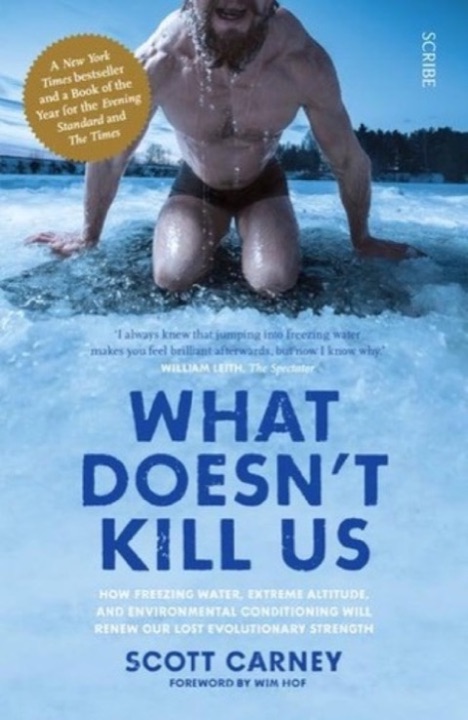
What Doesn't Kill Us: How Freezing Water, Extreme Altitude and Environmental Conditioning Will Renew Our Lost Evolutionary Strength
Applying the lessons from "What Doesn't Kill Us" by Scott Carney to your life can be a rewarding journey, especially given your adventurous spirit and resilience. Here are some ways you might integrate the book's concepts into your lifestyle:
-
Embrace Environmental Conditioning: - Given your interest in flying and your routine of cold plunges, you might already be familiar with some aspects of environmental conditioning. Consider expanding this by incorporating more varied environmental stressors, such as altitude training or fasting, to further tap into your evolutionary strengths.
-
Explore Breathing Techniques: - You could experiment with Wim Hof's breathing techniques to enhance your physical and mental resilience. This practice might complement your existing routine of exercise and meditation, potentially offering new insights into your mind-body connection.
-
Challenge Comfort Zones: - As someone who values resilience and growth, you might find it beneficial to regularly step out of your comfort zone. This could involve trying new activities, like skydiving, or pushing your limits in familiar ones, such as flying or exercising.
-
Reconnect with Nature: - Your love for travel and the outdoors aligns well with the book's emphasis on reconnecting with nature. Consider planning trips that involve more immersive natural experiences, such as hiking or camping in challenging environments.
-
Mind-Body Connection: - Given your belief in the power of the mind and body, you might explore how mental focus and breathing can influence your physical state. This could involve mindfulness practices or meditation to enhance your overall well-being.
-
Resilience Building: - Reflect on your past experiences, such as surviving plane crashes, and consider how you can use these lessons to build further resilience. Embracing discomfort and learning from challenges can help you continue to grow and adapt.
-
Scientific Curiosity: - Your interest in scientific advancements, like CRISPR, suggests a curiosity about the mechanisms behind human potential. You might delve deeper into the scientific aspects of environmental conditioning to better understand its benefits and applications.
-
Personal Growth: - As someone who values personal growth and lifelong learning, you could use the book's lessons as a framework for self-improvement. This might involve setting new goals or challenges that align with your core values of kindness and empathy.
By integrating these lessons into your life, you can continue to explore your potential and enhance your resilience, all while staying true to your values and aspirations.
What the book covers
"What Doesn't Kill Us" by Scott Carney explores the concept of environmental conditioning and how it can help humans reclaim their lost evolutionary strength. The book is a blend of investigative journalism, personal narrative, and scientific exploration, focusing on the work of Wim Hof, a Dutch extreme athlete known for his ability to withstand freezing temperatures.
Summary:
-
Introduction to Wim Hof: - The book begins with an introduction to Wim Hof, also known as "The Iceman," who has developed a method combining cold exposure, breathing techniques, and meditation to improve physical and mental health. - Hof's feats, such as climbing Mount Everest in shorts and running a marathon in the Arctic Circle barefoot, serve as the backdrop for exploring human potential.
-
The Science of Cold Exposure: - Carney delves into the science behind cold exposure, explaining how it can trigger physiological changes in the body, such as increased brown fat production, improved cardiovascular health, and enhanced immune function. - The book discusses the concept of hormesis, where exposure to mild stressors like cold can strengthen the body.
-
Breathing Techniques: - The breathing techniques taught by Hof are explored in detail. These involve hyperventilation followed by breath retention, which can lead to increased oxygenation and altered states of consciousness. - Carney examines the physiological effects of these techniques, including their impact on the autonomic nervous system and potential to reduce inflammation.
-
Environmental Conditioning: - The book argues that modern humans have become too comfortable, leading to a decline in physical resilience and health. - Carney suggests that by reintroducing environmental stressors like cold, altitude, and fasting, people can tap into dormant evolutionary strengths.
-
Personal Journey: - Carney shares his personal journey of training with Wim Hof, including his experiences with cold exposure and breathing exercises. - He describes the challenges and transformations he undergoes, providing a relatable narrative for readers.
-
Case Studies and Anecdotes: - The book includes various case studies and anecdotes of individuals who have benefited from Hof's methods, ranging from athletes to people with chronic illnesses. - These stories illustrate the potential of environmental conditioning to improve health and performance.
-
Criticism and Skepticism: - Carney addresses skepticism and criticism of Hof's methods, acknowledging the need for more scientific research while also highlighting the anecdotal evidence of their effectiveness.
Key Takeaways and Lessons:
- Embrace Discomfort: The book encourages readers to embrace discomfort and environmental stressors as a means to build resilience and improve health.
- Mind-Body Connection: It highlights the powerful connection between the mind and body, showing how mental focus and breathing can influence physical states.
- Potential for Self-Improvement: Carney suggests that humans have untapped potential for self-improvement through practices that challenge the body and mind.
- Importance of Nature: The book underscores the importance of reconnecting with nature and natural elements to enhance well-being.
- Scientific Exploration: While advocating for these methods, Carney also calls for more scientific exploration to fully understand their mechanisms and benefits.
Overall, "What Doesn't Kill Us" is an exploration of human potential and resilience, advocating for a return to more natural and challenging environments to unlock evolutionary strengths.