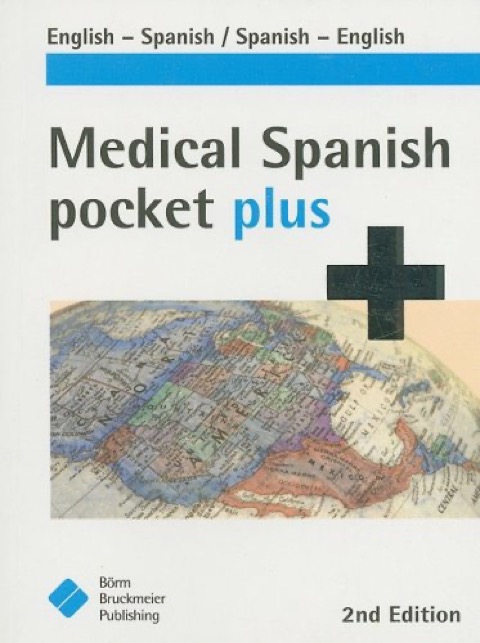
Medical Spanish Pocket Plus: English-Spanish, Spanish-English
Applying the lessons from "Medical Spanish Pocket Plus: English-Spanish, Spanish-English" by Carla Maute to your life can be a transformative step toward becoming a more inclusive and effective leader in the healthcare space. Here are some ways you might integrate these lessons:
-
Prioritize Precision in High-Stakes Communication: - In both medicine and aviation, clear communication is a matter of life and death. You should approach language barriers not as inconveniences, but as clinical risks to be mitigated with the same rigor you apply to a pre-flight checklist. By using structured, translated protocols, you ensure that no critical detail is lost in translation during a crisis.
-
Embody the "Stay Humble" Mantra Through Lifelong Learning: - Recognizing that you do not know a patient's language is the first step in humble leadership. By carrying a reference guide like this, you signal to your team and your patients that you are a lifelong learner who values their comfort over your own ego. This willingness to learn a new skill—even at a late stage in a successful career—is the hallmark of a true growth mindset.
-
Enhance Patient Trust and Rapport: - In entrepreneurship and medicine, trust is your most valuable currency. When you make the effort to speak a patient’s primary language, even if imperfectly, you immediately lower their cortisol levels and build a bridge of empathy. This rapport leads to better data gathering, as patients are more likely to be transparent with a provider who respects their culture.
-
Operationalize Efficiency in Complex Systems: - As an ER physician and entrepreneur, you know that time is the one resource you can't manufacture. Using a categorized, high-yield guide allows you to bypass the delay of waiting for a telephonic translator for simple tasks, streamlining the workflow of the entire department and improving the throughput of the urgent care or hospital setting.
-
Exercise Cultural Competence as a Legal and Ethical Duty: - From a legal and MBA perspective, providing care in a language the patient understands is not just good practice—it is a risk management strategy. By ensuring clear informed consent and accurate discharge instructions, you protect your practice from malpractice risks and ensure that your healthcare ventures meet the highest ethical standards of equity and accessibility.
-
Scale Impact Through Visual and Simple Tools: - The use of anatomical charts in the book serves as a reminder to simplify complex concepts. Whether you are explaining a medical procedure or a VC investment strategy, using visual aids and plain language ensures that your audience—be they patients or limited partners—is fully aligned with your vision.
By integrating these lessons, you will not only improve your clinical outcomes but also refine your leadership style to be one of radical empathy and operational excellence. Adopting these communication strategies ensures that your influence as a healer and an entrepreneur reaches every corner of the community, regardless of the language they speak.
What the book covers
"Medical Spanish Pocket Plus: English-Spanish, Spanish-English" by Carla Maute is a comprehensive, high-yield reference guide designed to facilitate effective communication between healthcare providers and Spanish-speaking patients. The book serves as a vital clinical tool, offering structured vocabulary and phrases that follow the natural flow of a patient encounter, from initial intake to specialized physical examinations. By providing phonetic pronunciations and categorized medical terms, Maute ensures that even practitioners with minimal linguistic training can deliver safe and accurate care. This "Plus" edition expands on standard versions by including a robust bilingual dictionary and detailed anatomical illustrations to aid in patient education.
Summary:
-
Clinical Intake and History Taking: - This section provides a systematic framework for conducting the History of Present Illness (HPI) and gathering social and family histories. It includes specific questions regarding the onset, duration, and character of symptoms, ensuring that the physician can capture a complete clinical picture without the immediate need for a translator. - Key phrases focus on clarifying the patient's chief complaint, such as "¿Dónde le duele?" (Where does it hurt?) and "¿Cuándo empezó?" (When did it start?), while also covering essential demographic information and insurance details necessary for administrative processing.
-
Physical Examination and System-Specific Assessment: - The guide organizes medical Spanish by organ system, including cardiovascular, respiratory, gastrointestinal, and neurological assessments. It lists commands and inquiries specific to the physical exam, such as asking a patient to breathe deeply or follow a light with their eyes. - Each system sub-section includes relevant vocabulary for common findings and diagnostic tests, allowing the clinician to explain what they are doing during the exam and what the immediate observations might suggest.
-
Specialized Clinical Scenarios and Pediatrics: - Maute includes dedicated chapters for specialized fields including Obstetrics and Gynecology, Pediatrics, and Surgery. These sections address sensitive topics such as pregnancy history, developmental milestones, and preoperative instructions, tailored to the specific needs of these patient populations. - For pediatric care, the book provides language for interacting with both the child and the parent, focusing on common childhood illnesses, vaccinations, and nutrition, which are critical for building rapport in a family-centered care model.
-
Emergency Medicine and Trauma Protocols: - Recognizing the high-stakes environment of the ER, the book outlines rapid-fire assessment questions for trauma and acute cardiac events. It prioritizes clarity and speed, helping the provider rule out life-threatening conditions through direct "yes/no" questions. - This section also covers psychiatric emergencies and substance abuse screenings, providing the necessary terminology to navigate mental health crises and potential overdoses with sensitivity and legal accuracy.
-
Pharmacy, Dosing, and Discharge Instructions: - The text offers a detailed breakdown of medication instructions, covering routes of administration, frequency, and potential side effects. It bridges the gap between diagnosis and treatment by enabling providers to explain prescriptions clearly to ensure patient compliance. - Discharge sections provide phrases for follow-up care, warning signs that require a return to the hospital, and basic home-care instructions, which are essential for reducing readmission rates and improving health outcomes.
-
Anatomical Visuals and Bilingual Dictionary: - One of the standout features of the "Plus" edition is the inclusion of labeled anatomical charts that allow providers to point to specific areas of the body to confirm locations of pain or injury. This visual aid transcends language barriers and simplifies complex medical explanations. - The extensive bilingual dictionary at the end of the book serves as a quick reference for specific medical nouns, verbs, and adjectives, organized alphabetically to allow for rapid lookup during a busy shift.
Ultimately, this book is an indispensable resource for any healthcare professional working in a diverse clinical setting. It prioritizes patient safety and diagnostic accuracy by removing the barriers of language, ensuring that the human element of medicine remains central even when a common tongue is lacking.