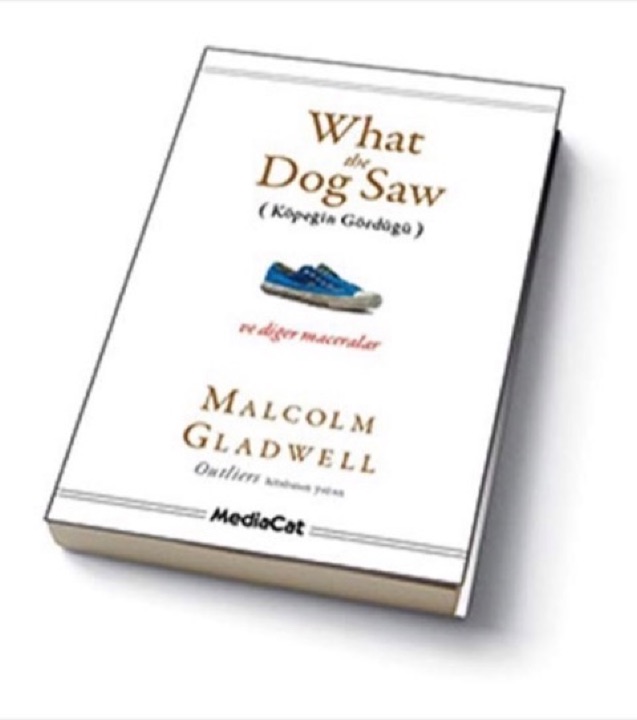
What the Dog Saw
Applying the lessons from Malcolm Gladwell's "What the Dog Saw" to your life can be a rewarding endeavor, given your rich experiences and personal philosophy. Here are some ways you might integrate these insights:
-
Embrace Complexity and Uncertainty: Your life experiences, particularly surviving plane crashes, have already shown you the unpredictability of life. Gladwell's essays, like "Blowing Up," emphasize the importance of embracing uncertainty and being adaptable. Continue to apply this mindset in your personal and professional life, using your resilience and humor to navigate challenges.
-
Question Assumptions: Gladwell often challenges conventional wisdom, as seen in essays like "The Ketchup Conundrum." Given your belief in questioning organized religion and societal norms, you can continue to apply this critical thinking to other areas of your life, ensuring you make informed and thoughtful decisions.
-
Value Diverse Perspectives: Your appreciation for thinkers like Marcus Aurelius and Socrates aligns with Gladwell's emphasis on interdisciplinary approaches. Continue to seek out diverse viewpoints and experiences, whether through travel, reading, or engaging with people from different backgrounds, to enrich your understanding of the world.
-
Focus on Perception and Communication: The essay "What the Dog Saw" highlights the importance of perception and non-verbal communication. Given your direct and humorous communication style, consider how you can further refine your ability to perceive and respond to others' needs, especially in your roles as a physician and family member.
-
Acknowledge Unintended Consequences: Gladwell's exploration of unintended outcomes, such as in "John Rock’s Error," can remind you to consider the broader impact of your actions. This awareness can be particularly valuable in your advocacy work and interactions with others, ensuring that your efforts align with your core values of kindness and empathy.
-
Challenge Conventional Metrics of Success: In essays like "Most Likely to Succeed," Gladwell questions traditional measures of success. Reflect on how you define success in your own life, focusing on personal fulfillment and being present, rather than external achievements or societal expectations.
-
Embrace Lifelong Learning: Your commitment to being a lifelong learner resonates with Gladwell's exploration of creativity and growth in "Late Bloomers." Continue to pursue new experiences and knowledge, whether through hobbies like flying and cooking or aspirations like skydiving.
By integrating these lessons into your life, you can continue to grow and thrive, staying true to your values while remaining open to new possibilities and insights.
What the book covers
"What the Dog Saw: And Other Adventures" is a collection of essays by Malcolm Gladwell, originally published in The New Yorker magazine. The book is divided into three parts, each exploring different themes through a series of essays. Gladwell's writing is characterized by his ability to weave together stories and research to illuminate complex ideas in an accessible way. Here is a summary of the book along with key takeaways and lessons:
Part One: Obsessives, Pioneers, and Other Varieties of Minor Genius
-
The Pitchman: This essay profiles Ron Popeil, a legendary figure in the world of infomercials. Gladwell explores the art of selling and the psychology behind why certain pitches work.
-
The Ketchup Conundrum: Gladwell examines why Heinz ketchup has remained the dominant brand while mustard has diversified. He delves into the science of taste and consumer behavior.
-
Blowing Up: This essay focuses on Nassim Nicholas Taleb, a trader who thrives on unpredictability. Gladwell discusses the concept of risk and how some people are better equipped to handle uncertainty.
-
True Colors: The story of hair dye and its cultural significance, exploring how marketing strategies can shape societal norms and perceptions.
-
John Rock’s Error: Gladwell tells the story of the birth control pill and the Catholic doctor who helped develop it, highlighting the intersection of science, religion, and unintended consequences.
-
What the Dog Saw: The title essay looks at Cesar Millan, the "Dog Whisperer," and his ability to communicate with dogs. Gladwell uses this to explore the idea of perception and non-verbal communication.
Part Two: Theories, Predictions, and Diagnoses
-
Open Secrets: Gladwell discusses the Enron scandal, differentiating between puzzles (problems with missing information) and mysteries (problems with too much information).
-
Million-Dollar Murray: An exploration of homelessness and the cost-effectiveness of targeted interventions, challenging conventional approaches to social issues.
-
The Picture Problem: This essay examines the limitations of intelligence and surveillance, using the example of satellite imagery in military operations.
-
Something Borrowed: Gladwell explores the concept of plagiarism through the lens of a legal case involving a playwright and a psychiatrist, questioning the nature of creativity and ownership.
-
Connecting the Dots: An analysis of the challenges in predicting and preventing terrorist attacks, focusing on the difficulty of interpreting available information.
-
The Art of Failure: Gladwell investigates why some people choke under pressure while others panic, exploring the psychology of performance.
Part Three: Personality, Character, and Intelligence
-
Late Bloomers: An exploration of creativity and the myth of the prodigy, highlighting how some people achieve success later in life.
-
Most Likely to Succeed: Gladwell examines the difficulty of predicting teacher performance, questioning the metrics used to evaluate talent.
-
Dangerous Minds: An analysis of criminal profiling and its effectiveness, questioning the assumptions behind profiling techniques.
-
The Talent Myth: Gladwell critiques the emphasis on talent in corporate culture, using the example of Enron to illustrate the pitfalls of this mindset.
-
The New-Boy Network: An exploration of job interviews and the biases inherent in evaluating candidates based on first impressions.
-
Troublemakers: Gladwell discusses the concept of "pit bull" dogs and the broader implications of labeling and perception in society.
Key Takeaways and Lessons
-
Complexity of Human Behavior: Gladwell's essays highlight the intricacies of human behavior and the difficulty of making accurate predictions or assessments based on limited information.
-
Perception and Reality: Many essays explore the gap between perception and reality, emphasizing the importance of questioning assumptions and looking beyond surface appearances.
-
Unintended Consequences: Gladwell frequently illustrates how well-intentioned actions can lead to unexpected outcomes, underscoring the need for careful consideration of potential consequences.
-
Value of Diverse Perspectives: The book showcases the importance of considering multiple viewpoints and the value of interdisciplinary approaches to problem-solving.
-
Challenge of Conventional Wisdom: Gladwell encourages readers to question conventional wisdom and to remain open to new ideas and approaches.
Overall, "What the Dog Saw" offers a thought-provoking exploration of various topics, encouraging readers to think critically about the world around them.