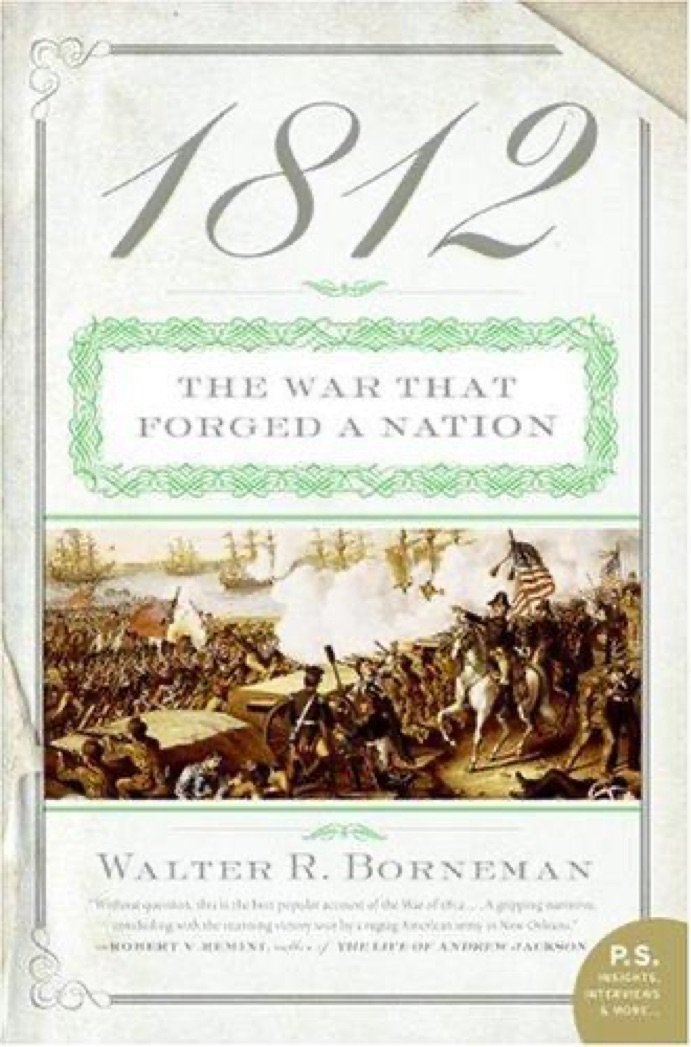
1812: The War That Forged a Nation
Applying the lessons from "1812: The War That Forged a Nation" by Walter R. Borneman to your life can be a transformative exercise in understanding how high-stakes conflict can be the ultimate catalyst for personal and professional maturation. Here are some ways you might integrate these lessons:
-
Forging Identity Through Adversity: - Just as the United States was a fractured collection of interests until the fires of 1812 unified them, you must recognize that your most difficult trials—whether a failed startup, a legal battle, or a medical crisis—are often the very events that define your core values. You should lean into these "crucible moments" to clarify your mission and emerge with a more singular, resilient focus.
-
The Danger of Relying on Past Laurels: - The early American defeats were largely due to aging Revolutionary War generals who were unprepared for a modern conflict. In your career as an entrepreneur or physician, you must remain a lifelong learner; never assume that yesterday’s successes qualify you for today’s challenges. Stay humble enough to constantly update your "tactical manual" as technology and markets shift.
-
Victory Through Specialized Mastery: - Oliver Hazard Perry’s success on Lake Erie was a result of building a fleet specifically for the environment he faced. Whether you are navigating a courtroom, an cockpit, or a boardroom, you must master the specific "terrain" of your industry. Don't just compete generally; build the specific skills and tools required to win in your unique niche.
-
Seizing the Narrative After the Fact: - The Battle of New Orleans was militarily redundant but psychologically essential because it allowed the nation to claim a victory. In leadership, how you frame the conclusion of a project or a crisis often matters as much as the result itself. You should work to ensure that your team views even a "draw" or a recovery as a platform for future confidence and growth.
-
The Value of Strategic Pivot: - When the land invasion of Canada failed, the U.S. found success by shifting resources to naval warfare and the Southern theater. As a venture capitalist and entrepreneur, you must be willing to abandon a failing strategy and redirect your capital and energy toward the areas where you are seeing actual momentum, rather than throwing good resources after bad.
-
Resilience in the Face of Total Loss: - The burning of Washington could have been the end of the American experiment, but the government regrouped and continued. When you face a catastrophic setback that feels like your "capital is on fire," remember that infrastructure can be rebuilt; what matters is the survival of the leadership's will and the continuity of the mission.
By integrating these lessons, you move beyond merely surviving the conflicts of your professional and personal life. You begin to see every crisis as an opportunity to discard outdated colonial mindsets and forge a more powerful, unified version of yourself. By staying hungry for growth and humble in the face of history’s lessons, you ensure that your personal "nation" is not just surviving, but actively thriving on the global stage.
What the book covers
"1812: The War That Forged a Nation" by Walter R. Borneman is a sweeping narrative history of the often-overlooked conflict that solidified American independence from Great Britain. The book explores how a young, unprepared, and deeply divided United States survived a series of military blunders and the burning of its capital to emerge with a newfound sense of national identity. Borneman argues that while the war technically ended in a draw, it served as the essential crucible that transformed a collection of loosely affiliated states into a unified global power.
Summary:
-
The Prelude to Conflict: - Borneman details the escalating tensions between the United States and Great Britain, primarily driven by the British Royal Navy's practice of impressment—seizing American sailors to serve in the war against Napoleonic France. He also examines the economic impact of the Embargo Acts and the rise of the "War Hawks" in Congress, such as Henry Clay and John C. Calhoun, who viewed war as a matter of national honor.
-
The Disastrous Invasions of Canada: - The early stages of the land war were marked by American incompetence and a lack of professional military leadership. The author recounts the humiliating surrender of Detroit by General William Hull and the failed attempts to cross the Niagara River, illustrating how political patronage in the officer corps nearly doomed the American cause at the outset.
-
Naval Triumphs on the High Seas and Lakes: - Contrasting the failures on land, Borneman highlights the unexpected success of the nascent U.S. Navy. He provides vivid accounts of the USS Constitution's victories over British frigates and, more importantly, the strategic mastery of Oliver Hazard Perry on Lake Erie, which secured the American Northwest and provided a much-needed boost to national morale.
-
The British Offensive and the Burning of Washington: - As the Napoleonic Wars in Europe concluded, Britain redirected its full military might toward North America. Borneman describes the chaotic scenes at the Battle of Bladensburg and the subsequent British occupation of Washington, D.C., where the White House and the Capitol were set ablaze, forcing President James Madison and his cabinet into a desperate retreat.
-
The Defense of Baltimore and the Star-Spangled Banner: - Following the destruction in Washington, the British turned their attention to the vital port of Baltimore. The book details the resilient defense of Fort McHenry, an event that not only halted the British advance in the Chesapeake but also inspired Francis Scott Key to pen the lyrics that would eventually become the American national anthem, symbolizing a turning point in the war's psychological tide.
-
The Death of Tecumseh and the Frontier War: - A significant portion of the narrative is dedicated to the conflict in the interior, specifically the struggle against Native American confederacies allied with the British. Borneman covers the Battle of the Thames and the death of the Shawnee leader Tecumseh, an event that shattered Native resistance in the Old Northwest and fundamentally changed the trajectory of American westward expansion.
-
The Treaty of Ghent and the Battle of New Orleans: - The book concludes with the diplomatic negotiations in Belgium that resulted in the Treaty of Ghent. Borneman explains that while the treaty merely restored the status quo ante bellum, Andrew Jackson’s decisive victory at the Battle of New Orleans—fought after the treaty was signed—provided the United States with a sense of military triumph that redefined the war's legacy in the eyes of the public.
Ultimately, Borneman asserts that the War of 1812 was the true conclusion of the American Revolution. It forced the United States to develop a professional military, encouraged domestic manufacturing, and ended the threat of secession from New England states. By surviving this "Second War of Independence," the nation proved its permanence and established a unified character that would carry it through the coming century.