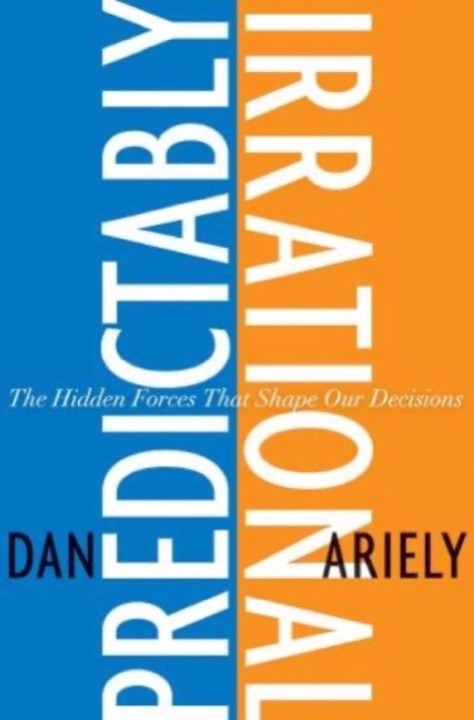
Predictably Irrational: The Hidden Forces That Shape Our Decisions
Applying the lessons from "Predictably Irrational" by Dan Ariely to your life can help you make more informed and rational decisions. Here are some ways you might incorporate these insights:
-
Awareness of Relativity: Recognize when you're making decisions based on relative comparisons rather than absolute values. For instance, when evaluating opportunities or purchases, try to assess their intrinsic value rather than comparing them to other options.
-
Anchoring and Adjustment: Be mindful of initial anchors that might influence your perception of value. Whether it's in financial decisions or personal judgments, strive to evaluate situations based on their true worth rather than initial impressions.
-
Value of Free: Understand the emotional appeal of "free" offers and assess whether they truly provide value. This awareness can help you avoid unnecessary commitments or acquisitions that don't align with your goals.
-
Social vs. Market Norms: Be conscious of the context in which exchanges occur. In your professional and personal interactions, avoid mixing social and market norms to prevent misunderstandings and maintain healthy relationships.
-
Pre-commitment Strategies: Use pre-commitment mechanisms to enhance self-control and reduce procrastination. For example, set deadlines for personal projects or use accountability partners to help you stay on track with your goals.
-
Endowment Effect: Challenge the tendency to overvalue possessions simply because you own them. This can help you make more rational decisions about what to keep or let go, aligning with your minimalist and purposeful lifestyle.
-
Managing Expectations: Set realistic expectations to avoid disappointment and enhance satisfaction. Whether it's in your personal relationships or professional endeavors, managing expectations can lead to more fulfilling experiences.
-
Ethical Context: Create environments that promote ethical behavior by reducing ambiguity and rationalization opportunities. This aligns with your values of kindness and empathy, ensuring that your actions reflect your ethical beliefs.
-
Decision-Making Under Stress: Apply the calm decision-making skills you've honed in emergency situations to everyday life. This can help you navigate stressful or unexpected events with composure and clarity.
-
Leveraging Technology: As someone who is forward-thinking about technological advancements, use technology to support your decision-making processes. Tools like apps for time management or financial planning can help you make more informed choices.
By integrating these lessons into your life, you can enhance your decision-making abilities, align your actions with your core values, and continue to grow as a lifelong learner.
What the book covers
"Predictably Irrational: The Hidden Forces That Shape Our Decisions" by Dan Ariely is a fascinating exploration of the irrational behaviors that influence our decision-making processes. Ariely, a behavioral economist, uses a series of experiments and real-world examples to illustrate how our decisions are often not as logical as we might believe. Here is a thorough summary of the book, along with key takeaways and lessons:
Summary:
-
The Truth About Relativity: - Ariely discusses how people make decisions based on relative comparisons rather than absolute values. For instance, when presented with three options, people tend to choose the one that is easily comparable to another option, even if it's not the best choice overall.
-
The Fallacy of Supply and Demand: - The book explores how initial prices (anchors) can influence our perception of value. Once an anchor is set, it becomes a reference point for future decisions, often leading to irrational pricing and purchasing behaviors.
-
The Cost of Zero Cost: - Ariely highlights the irrational allure of "free" offers. People tend to overvalue free items, even when they are not the most beneficial choice, because the emotional appeal of getting something for nothing is powerful.
-
The Cost of Social Norms: - The author examines the difference between social norms (non-monetary exchanges) and market norms (monetary exchanges). Mixing these norms can lead to misunderstandings and conflicts, as people react differently when money is involved.
-
The Influence of Arousal: - Ariely discusses how emotional and physical states can drastically alter decision-making. In heightened states of arousal, people are more likely to make irrational choices that they would not consider in a calm state.
-
The Problem of Procrastination and Self-Control: - The book delves into the common issue of procrastination and the struggle for self-control. Ariely suggests that pre-commitment mechanisms can help individuals overcome these challenges by setting constraints on future behavior.
-
The High Price of Ownership: - Ariely explains the endowment effect, where people ascribe more value to things merely because they own them. This can lead to overvaluation and reluctance to part with possessions, even when it is rational to do so.
-
Keeping Doors Open: - The tendency to keep options open, even when it is costly or unnecessary, is explored. Ariely argues that this behavior stems from a fear of loss and can lead to suboptimal decision-making.
-
The Effect of Expectations: - Expectations can shape perceptions and experiences. Ariely shows how preconceived notions can influence outcomes, such as the enjoyment of a meal or the effectiveness of a medication.
-
The Power of Price:
- The book discusses how price can affect perceived quality and effectiveness. Higher prices can lead to higher expectations and, consequently, a better experience, even if the product is identical to a cheaper version.
-
The Context of Our Character, Part I & II:
- Ariely explores how context and environment can influence ethical behavior. He demonstrates that people are more likely to act dishonestly when they perceive the situation as ambiguous or when they can rationalize their actions.
-
Beer and Free Lunches:
- The final chapters discuss how people often make choices that are not in their best interest due to social influences and the desire to conform.
Key Takeaways and Lessons:
- Awareness of Irrationality: Understanding that our decisions are often influenced by irrational factors can help us make more informed choices.
- Anchoring and Adjustment: Be cautious of initial anchors and strive to evaluate options based on their intrinsic value rather than relative comparisons.
- Value of Free: Recognize the emotional appeal of free offers and assess whether they truly provide value.
- Social vs. Market Norms: Be mindful of the context in which exchanges occur and avoid mixing social and market norms.
- Pre-commitment Strategies: Use tools like deadlines and contracts to enhance self-control and reduce procrastination.
- Endowment Effect: Challenge the tendency to overvalue possessions simply because they are owned.
- Managing Expectations: Set realistic expectations to avoid disappointment and enhance satisfaction.
- Ethical Context: Create environments that promote ethical behavior by reducing ambiguity and rationalization opportunities.
Overall, "Predictably Irrational" provides valuable insights into the hidden forces that shape our decisions, encouraging readers to question their assumptions and strive for more rational decision-making.